ASUU Shuts Down Universities Nationwide As Two-Week Warning Strike Begins

The Academic Staff Union of Universities (ASUU) has launched a two-week nationwide warning strike after the expiration of its 14-day ultimatum to the Federal Government. Speaking at a press conference in Abuja on Sunday, ASUU President, Professor Chris Piwuna, announced that the strike would take effect from midnight, marking the end of the ultimatum. He said the industrial action became necessary to compel the government to honor past agreements and resolve the persistent issues plaguing Nigeria’s public universities. ASUU had issued the ultimatum on September 28, 2025, as part of renewed efforts to address long-standing disputes with the government over funding, salaries, and working conditions. According to Piwuna, all efforts to reach a resolution failed, leaving the union with no choice but to act. “All branches of ASUU are hereby directed to withdraw their services from 12:01 am on Monday, 13th October 2025. The warning strike shall be total and comprehensive as agreed at the last NEC meeting,” he stated.  

Read More

Davido Fires Back At Troll Who Mocked His Plantain And Eggs Post

Davido has lashed out at a troll who tried to belittle his social media post featuring a simple home-cooked meal. The singer had shared a photo of fried plantain, peppered meat, and eggs while relaxing in his room, giving fans a glimpse of his laid-back moment. But one user criticized the post, saying it wasn’t worthy of being on his main page and should have been shared on Snapchat instead. Davido, clearly unimpressed, fired back saying, “Ur very stupid… nah u go tell me wetin to do with my life? I can’t post my plantain n eggs again… wtf y’all be on fr.”

Read More
China Condemns Trump’s 100% Tariff Threat, Defends Rare Earth Export Controls

China Condemns Trump’s 100% Tariff Threat, Defends Rare Earth Export Controls

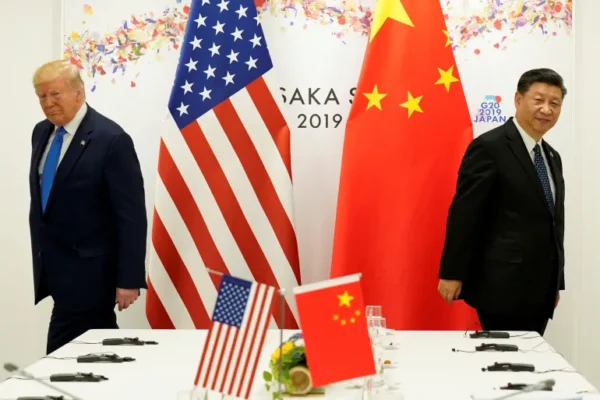
By Trend Brio News  | October 12, 2025 BEIJING — China has lashed out at U.S. President Donald Trump’s decision to impose 100 percent tariffs on Chinese imports, calling the move “hypocritical” and warning Washington to resolve trade tensions through dialogue rather than confrontation. In a statement released on Sunday, China’s Ministry of Commerce defended its recent restrictions on rare earth exports and related technologies, saying the measures were taken in response to a series of “provocative and damaging” U.S. actions since bilateral trade talks in Madrid last month. “China’s stance is consistent. We do not want a tariff war but we are not afraid of one,” the ministry said, adding that Beijing would not back down in the face of “threats and coercion.” Beijing accused Washington of double standards after Trump announced the sweeping new tariffs on Friday, claiming China had weaponized its dominance in rare earth production. The tariffs, which take effect November 1, target a wide range of Chinese goods and include new restrictions on software exports. “These actions have severely harmed China’s interests and undermined the atmosphere for economic and trade talks,” the statement added. Rare earth elements—crucial for smartphones, electric vehicles, renewable energy systems, and military hardware—have become a central issue in the escalating economic rivalry between the two superpowers. China currently dominates global production and processing of these materials and on Thursday introduced tighter controls on the export of technologies used in mining and refining them. The new restrictions have rattled global markets, with tech stocks sliding amid fears of disruptions to the supply chain for critical minerals. The renewed trade tensions also threaten to derail a possible meeting between Trump and Chinese President Xi Jinping at the Asia-Pacific Economic Cooperation (APEC) Summit in South Korea later this month. The encounter would be their first face-to-face meeting since Trump’s return to office in January. Meanwhile, Taiwan’s Ministry of Economic Affairs downplayed concerns that China’s export controls would disrupt its semiconductor industry, saying the rare earth elements covered by the new rules differ from those used in chip manufacturing. “The expanded ban differs from materials required in Taiwan’s semiconductor processes, so no significant impact is expected,” the ministry said, noting that Taiwan sources most of its rare earth materials from Europe, the U.S., and Japan. Despite China’s restraint in not announcing countermeasures, observers expect Beijing to continue using targeted export restrictions and diplomatic pressure as leverage in the ongoing trade confrontation.

Read More

Lagos Government Demolishes Ola of Lagos Showroom, Influencer Promises New Outlet

The Lagos State Government has demolished the car showroom of Waris Olayinka Akinwande, popularly known as Ola of Lagos. The incident, which took place on Saturday, October 11, 2025, was captured in a viral TikTok video shared by fellow car dealer Ibilo. Although authorities have not officially stated the reason for the demolition, reports suggest that the showroom’s location beneath high-tension power lines may have influenced the decision. In response, Ola of Lagos took to Instagram to assure his followers that his business remains active. He also announced plans to open a new, improved showroom, expressing determination to bounce back from the setback. The demolition has sparked widespread discussion on social media, with many users expressing sympathy for Ola of Lagos and questioning the fairness of the government’s actions.  

Read More

El-Sisi, Trump to Co-Chair Gaza Peace Summit in Egypt on Monday

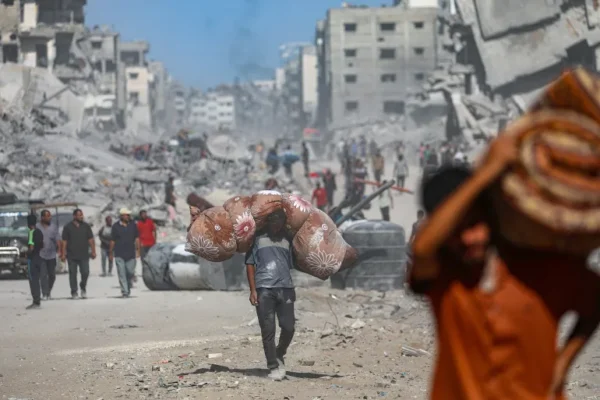
By Trend Brio News | October 12, 2025 SHARM EL-SHEIKH, EGYPT — Egyptian President Abdel Fattah el-Sisi and U.S. President Donald Trump are set to co-chair an international peace summit in Egypt’s Sharm el-Sheikh on Monday, bringing together leaders from over 20 countries to discuss a comprehensive plan to end Israel’s devastating war on Gaza. According to a statement from the Egyptian presidency on Saturday, the summit aims “to end the war in the Gaza Strip, enhance efforts to achieve peace and stability in the Middle East, and usher in a new era of regional security and stability.” Among those confirmed to attend are United Nations Secretary-General António Guterres, UK Prime Minister Keir Starmer, French President Emmanuel Macron, Italy’s Giorgia Meloni, and Spain’s Pedro Sánchez. It remains unclear whether Israeli Prime Minister Benjamin Netanyahu or any representatives from Hamas will take part. The announcement follows the implementation of the first phase of a U.S.-brokered ceasefire between Israel and Hamas, which includes the release of Israeli hostages and Palestinian prisoners, the partial withdrawal of Israeli troops, and the resumption of humanitarian aid into Gaza. Palestinians Return to Rubble As the ceasefire holds, tens of thousands of displaced Palestinians have begun returning north along the Gaza coast to their homes — or what remains of them. Much of Gaza lies in ruins after two years of war that have killed more than 67,000 people, mostly civilians, and left the enclave on the brink of famine. Al Jazeera’s Hani Mahmoud, reporting from Gaza City, described scenes of resilience amid destruction. “People walk this exhausting journey back because they belong here,” he said. “But spending a night here is going to be very difficult. The struggle to survive continues each hour.” Recovery Efforts Underway Gaza’s Government Media Office said more than 5,000 recovery and relief operations have been conducted since the ceasefire began. Over 850 missions were carried out by civil defence and municipal teams to recover bodies and clear debris, while more than 900 efforts focused on restoring water and sewage infrastructure. Officials in Khan Younis reported that 85 percent of the city has been destroyed, with over 400,000 tonnes of rubble still blocking streets. Aid agencies say the work is being done with minimal resources due to Israel’s continued blockade restricting fuel and equipment imports. Push for Humanitarian Access Aid groups, including the World Food Programme (WFP) and UNICEF, have called on Israel to reopen border crossings to allow the delivery of food, medicine, and relief materials. WFP country director Antoine Renard said the agency was ready to reopen 145 food distribution points across Gaza once access is restored. UNICEF also announced plans to scale up food and hygiene supplies for children and families. Prisoner and Hostage Exchange As part of the ceasefire deal, 20 Israeli captives and the bodies of 28 others are set to be handed over on Monday, according to President Trump. In exchange, Israel will release 250 Palestinian prisoners and about 1,700 Gazans detained without charge since the war began. In Tel Aviv, tens of thousands gathered in Hostages Square to mark the expected return of captives. Trump’s son-in-law Jared Kushner, daughter Ivanka Trump, and U.S. envoy Steve Witkoff — who helped broker the agreement — joined the rally. “I dreamed of this night. It’s been a long journey,” Witkoff said to loud applause. “As you return to your families, know that all of Israel and the world stand ready to welcome you home.” Al Jazeera’s Hamdah Salhut reported that families of Israeli captives credited Trump and the U.S. team for the deal, accusing Prime Minister Netanyahu of prolonging the conflict for political reasons. With the summit in Sharm el-Sheikh set to convene on Monday, global leaders hope the talks can solidify the fragile ceasefire and pave the way for lasting peace in the region.

Read More
Pakistan, Afghanistan Trade Deadly Border Fire as Tensions Escalate Over TTP Attacks

Pakistan, Afghanistan Trade Deadly Border Fire as Tensions Escalate Over TTP Attacks

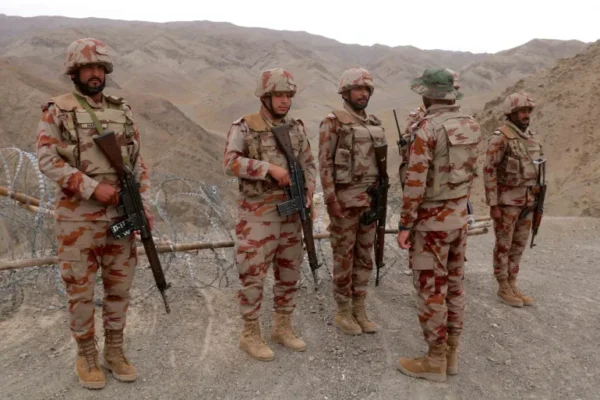
ISLAMABAD, Pakistan – Deadly clashes have erupted along the Pakistan-Afghanistan border, leaving dozens dead in one of the fiercest confrontations between the two sides in recent years. Both nations are trading blame over who initiated the violence. According to Afghan officials, at least 58 Pakistani soldiers were killed in what they described as a “retaliatory” assault on Saturday night. The Taliban administration claimed it captured 25 Pakistani border posts and destroyed several positions along multiple frontlines. Pakistan’s military, however, disputed the figures, confirming 23 soldiers killed while claiming its forces neutralized 200 Taliban fighters and affiliated militants. Islamabad described the attacks as “unprovoked firing”, accusing the Taliban of destabilizing the border to shield members of the Tehrik-e-Taliban Pakistan (TTP). The violence erupted just two days after a series of deadly explosions in Kabul and Paktika province, which the Taliban government blamed on Pakistan. Islamabad has neither confirmed nor denied conducting air strikes targeting TTP leader Noor Wali Mehsud, who was reportedly in the area. Heavy Fire Across Multiple Border Points Intense exchanges of gunfire and shelling were reported in Angoor Adda, Bajaur, Kurram, Dir, Chitral, and Bahram Chah, with both sides using heavy weapons. Afghanistan’s Ministry of Defence said it has deployed tanks and reinforcements along the frontier, known as the Durand Line. Pakistan’s Inter-Services Public Relations (ISPR) said its forces “repelled the assault decisively,” briefly capturing 21 Afghan positions and destroying multiple “terrorist training camps.” Residents of border towns reported intermittent gunfire through Sunday, while communication lines and trade routes between the two nations remained tense. A Fractured Relationship Once allies, Islamabad and the Taliban government have grown increasingly hostile since the Taliban’s return to power in 2021. Pakistan accuses Kabul of harboring the TTP, which has intensified attacks inside Pakistan, killing thousands in recent years. Analysts say the weekend clashes were triggered by Pakistan’s growing frustration over cross-border terrorism. “If Kabul won’t act against the TTP, Islamabad will,” said security analyst Mehmood Jan Babar, noting that many TTP members share ideological ties with the Afghan Taliban. The tensions have also been worsened by Pakistan’s deportation of Afghan refugees and air strikes targeting alleged TTP hideouts inside Afghanistan. Regional and International Reactions Neighboring countries have urged restraint. Iran, Saudi Arabia, and Qatar each released statements calling for dialogue and de-escalation, warning that continued hostilities could destabilize the region. Saudi Arabia’s Foreign Ministry urged both nations to “embrace dialogue and wisdom,” while Iran’s Foreign Minister Abbas Araghchi said stability between the two neighbors is “essential for regional peace.” Will It Escalate Further? Despite the heavy casualties, experts believe a broader conflict remains unlikely. Former Pakistani diplomat Asif Durrani told reporters that “neither side wants full-scale war,” citing Pakistan’s military superiority and Afghanistan’s limited conventional capability. However, analysts

Read More

Tension in Kogi West as Bandits Lay Siege on Yoruba-Speaking Communities

By Trend Brio News| October 12, 2025 KOGI STATE, Nigeria – Fear and uncertainty have gripped the Kogi West Senatorial District, the Yoruba-speaking region of Kogi State, as escalating bandit attacks continue to terrorize residents across the area’s seven local government areas. Once known for its peaceful, agrarian communities, the region has become a hotspot of insecurity, with villagers abandoning their homes and farmlands in droves. Those who remain live in constant fear, unable to farm or move freely as armed gangs launch frequent assaults on settlements. According to local sources, numerous lives have been lost, including those of policemen and vigilante members, in recent attacks. The bandits, believed to have migrated from parts of the North-West and North-Central regions, are said to be operating from dense forest hideouts where they plan kidnappings and raids on travelers and farmers. “The forests that once gave us food and peace are now where death lives,” lamented a resident of Kabba, who described how entire communities have been forced to relocate. Poor Roads Fuel Insecurity The deteriorating infrastructure in Kogi West has worsened the crisis. Key roads, such as the Ilorin–Omuaran–Kabba Highway, have reportedly collapsed after years of neglect by both state and federal authorities, leaving several communities inaccessible and vulnerable to criminal activities. Only a handful of towns—mainly local government headquarters—have paved roads, making it nearly impossible for security forces to respond quickly to distress calls or patrol remote areas. A Region in Distress For many locals, the insecurity is only the latest chapter in a long history of government neglect. Despite the region’s contributions to agriculture and commerce, residents say they have been marginalized in infrastructure and development projects. “Our people can no longer go to the farm or market without fear,” said a community leader. “We have been forgotten by those in power.” As the situation worsens, calls are growing for urgent government intervention, including improved road access, better policing, and coordinated security operations to reclaim the forests and restore peace to the embattled region.

Read More

$1.65 Trillion Crypto Meltdown Rocks Global Markets as Trump’s Tariffs Trigger Panic — Nigeria Hit Hardest

By Trend Brio News  | October 12, 2025 LAGOS, Nigeria – The global cryptocurrency market suffered its worst single-day collapse in history on October 10, 2025, wiping out a staggering $1.65 trillion in value following U.S. President Donald Trump’s sudden imposition of 100% tariffs on Chinese imports and tough new export restrictions on key software technologies. The shock announcement sparked widespread panic across global exchanges, leading to the liquidation of over $19 billion in leveraged positions and affecting more than 1.6 million traders worldwide. Bitcoin plunged 8% to $111,000, losing about $500 billion in market value, while Ethereum crashed 12% to $3,778, dragging altcoins like XRP and Solana sharply lower. Overall, the total crypto market capitalization tumbled from $4.3 trillion to $3.74 trillion, marking an unprecedented market rout. Analysts blamed institutional over-leverage and escalating U.S.-China trade tensions for the market shock. “This isn’t just a crypto event—it’s a symptom of broader trade war contagion,” warned Brian Strugats, head trader at Multicoin Capital. Nigeria’s Crypto Hope Shattered In Nigeria, one of the world’s fastest-growing crypto markets, the crash hit particularly hard. With over 32% of Nigerians reportedly owning cryptocurrency—second highest globally—the sell-off wiped out savings and shattered confidence across the country’s vibrant trading community. “I woke up to my portfolio down 70%. It’s not just money—it’s my escape plan,” lamented Aisha Okon, a 28-year-old Lagos-based graphic designer who invested over 2 million naira in Bitcoin and Ethereum to hedge against naira inflation. Nigeria’s crypto economy had thrived amid chronic naira devaluation and inflation above 34%, with peer-to-peer (P2P) trading volumes reaching $400 million monthly before the crash. Platforms like Binance P2P, Paxful, and Yellowcard saw trading spikes of over 140% as desperate traders rushed to liquidate assets. From Policy Whiplash to Financial Pain The turmoil also exposed the fragility of Nigeria’s crypto ecosystem, which has battled years of regulatory uncertainty. After the Central Bank of Nigeria’s 2021 ban on bank-crypto transactions, traders shifted to underground P2P networks. The 2025 Investments and Securities Act finally legitimized digital assets, sparking optimism—until now. “We turned to crypto because banks charge 20% on transfers, and the naira loses 24% yearly,” said Chinedu Eze, a trader from Abuja who lost 1.5 million naira in the meltdown. “Now, Trump’s tariffs hit us hardest—our dollar-pegged hopes evaporated overnight.” Social Media Erupts in Despair Across social platforms, frustration boiled over. The hashtag #NairaCryptoCrash trended on X (formerly Twitter) as devastated investors shared stories of ruin. “From ATH dreams to zero. Nigeria’s youth built this market on hope—now it’s ashes,” one user wrote. Glimmer of Hope? Despite the devastation, some analysts see opportunity. Edul Patel, CEO of Mudrex, noted that “October corrections often precede strong rallies,” urging patience among long-term holders. Yet for many Nigerian investors, optimism feels distant. “Crypto promised freedom from naira woes,” Okon said quietly. “Instead, global politics chained us tighter.” As markets struggle to stabilize, Bitcoin hovers near $112,000, and Nigerian traders are shifting toward stablecoins like Tether (USDT) for refuge. But with trade wars intensifying and domestic regulations tightening, the shockwave may leave lasting scars on a generation that once saw crypto as its path to financial independence.

Read More