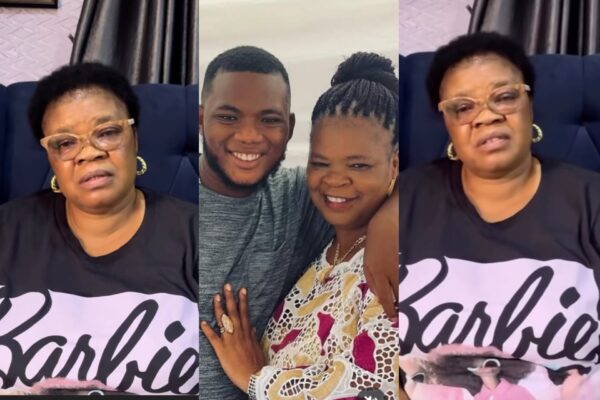
Peller Accuses Partner Jarvis Of TikTok Money Laundering, She Alleges He Tried To Attack Her

Comedian Peller has ignited a social media storm with allegations that his partner, Jarvis, was involved in money laundering through TikTok. Peller claims Jarvis accepted gifts on the platform as part of a scheme to launder money, collaborating with others and splitting the profits 50/50. He said he had no idea about her activities when she moved to Lagos, believing she was financially better off than him. “When Jarvis came to Lagos, I thought she had more money than me, not knowing she was into money laundering,” Peller revealed. “People were gifting her on TikTok to launder money, and then they divided the earnings equally.” Jarvis fired back with accusations of physical violence, claiming Peller nearly attacked her during a disagreement. She says she had to flee for her safety and warned her staff to remain cautious. “Justice for Jarvis would have been trending if I hadn’t run for my life,” she said, highlighting the severity of the situation. "When Jarvis came to Lagos I thought she has more money than me not knowing she was into money lāund3ry. People were gifting her on tiktok to lāund3r money then split the earnings 50/50 afterwards." — Peller. 🤦🏾‍♂️ pic.twitter.com/r51FlTP5SG — 𝐀𝐬𝐚𝐤𝐲𝐆𝐑𝐍 (@AsakyGRN) November 1, 2025

Read More

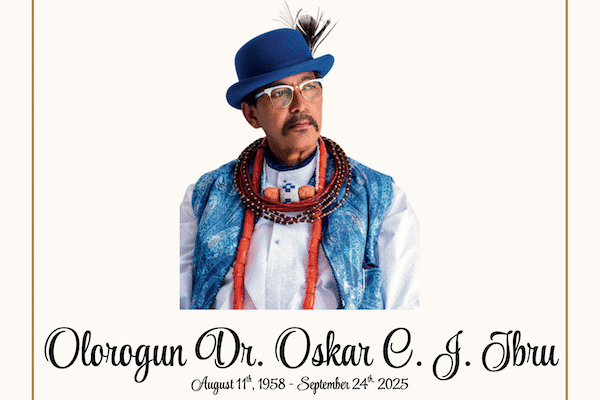
Olorogun Oskar Ibru Goes Home November 27

The family of renowned billionaire businessman and philanthropist, Olorogun Dr. Oskar Christian John Ibru, has announced the schedule of funeral rites to celebrate his remarkable life and enduring legacy. In a statement released by the family, a series of ceremonies will take place in Lagos and Delta States between November 20 and November 30, 2025, to honour the late industrialist who passed away September 24, 2025. According to the announcement, events will begin with a Service of Songs in Lagos on Thursday, November 20, followed by a Church Service the next day, Friday, November 21. The celebrations of life will then move to Delta State, where another Service of Songs will hold on Wednesday, November 26, ahead of the Funeral Service on Thursday, November 27. The rites will conclude with an Outing Service on Sunday, November 30. Dr. Oskar Ibru, born on August 11, 1958, was a towering figure in Nigerian business and public life. He held several revered traditional titles, including the Ochuko R’Ovie of Agbarha-Otor Kingdom, Odomese of Olomu Kingdom, Onekirode of Effurun-Otor Kingdom, and the Otunba Boyejo of Ijebu — the first non-indigene to receive that honour. A scion of the illustrious Ibru family, Dr. Ibru was celebrated for his pioneering leadership in commerce, his philanthropic initiatives, and his efforts to promote unity across communities and cultures. In their message, the Ibru family expressed deep appreciation to friends, associates, and well-wishers for their support and prayers, adding that the forthcoming rites will be “a celebration of a life devoted to faith, family, and service to humanity.”

Read More

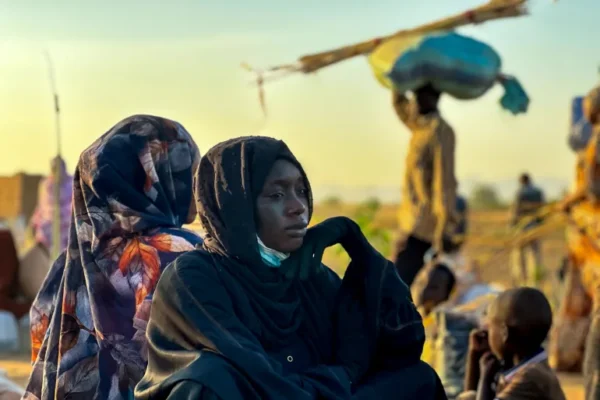
No Mercy: Survivor Recounts RSF Mass Killings in Sudan’s El-Fasher as Thousands Flee Amid Atrocities

Thousands of civilians remain trapped in el-Fasher, Sudan, as harrowing accounts emerge of mass killings carried out by the Rapid Support Forces (RSF) following their capture of the city on October 26. Survivors describe scenes of horror, accusing the paramilitary group of executing civilians “without mercy” in what humanitarian officials warn may amount to ethnic cleansing. For 550 days, Abubakr Ahmed, a 29-year-old fighter in the city’s “popular resistance” unit, battled alongside the army to defend el-Fasher — the last government stronghold in Darfur. But when the army surrendered and withdrew under a deal it claimed was meant to prevent a bloodbath, tens of thousands of civilians were left behind. “The RSF killed civilians and left their corpses in the streets,” Ahmed told Al Jazeera after escaping. “They were killed without mercy.” According to Sudan’s Doctors’ Network, the RSF killed at least 1,500 people in the first three days after seizing control, including 460 patients and companions at al-Saud hospital — a figure also verified by the World Health Organization (WHO). Videos authenticated by Al Jazeera’s Sanad unit show RSF troops standing over piles of bodies and executing unarmed men. More than 33,000 people have already fled to nearby towns like Tawila and Tine, but most civilians remain trapped, hiding from RSF patrols. Those escaping face a perilous journey through the desert with little food or water. “The majority of people won’t stay in el-Fasher because they are terrified of the RSF,” said one survivor, Mohammed, who arrived in Tawila on October 28. “They don’t trust them. The Arabs will live in one place and the non-Arabs in another — that’s just the way it is now.” The Yale Humanitarian Research Lab (HRL) reported evidence of “mass killings” as people attempted to flee the city, warning that current death estimates are likely undercounted. UNICEF’s Sudan representative, Sheldon Yett, described el-Fasher as “killing fields,” drawing parallels to the Rwandan genocide. “The kind of slaughter we are seeing, and the pride [the perpetrators] have in killing innocent people, is what scares me,” he said. Aid efforts have nearly collapsed as RSF fighters target local relief workers, accusing them of collaborating with the army. UNICEF has lost contact with many of its community partners, including those running food kitchens. “Many are on the move and hiding, and they’re afraid,” Yett said. International outrage has followed the massacre, with the UN, United States, and European Union issuing condemnations and urging the RSF to protect civilians. However, analysts and survivors accuse the global community of failing to act before the atrocities unfolded. “This is a case of refusal and betrayal by the international community,” said Sudan expert Hamid Khalafallah. “They didn’t do anything serious to protect civilians.” Human Rights Watch researcher Jean-Baptiste Gallopin said the RSF’s actions in el-Fasher mirror previous atrocities in el-Geneina and Ardamata, warning that impunity has emboldened RSF leader Mohamed Hamdan “Hemedti” Dagalo. “Diplomats are focused on getting to an elusive ceasefire, but by avoiding sanctions or accountability, they’ve effectively washed their hands of the atrocities that occur,” Gallopin said. The fall of el-Fasher marks one of the bloodiest chapters in Sudan’s two-and-a-half-year civil war — and leaves Darfur’s civilians once again at the mercy of militias accused of genocide two decades ago.

Read More

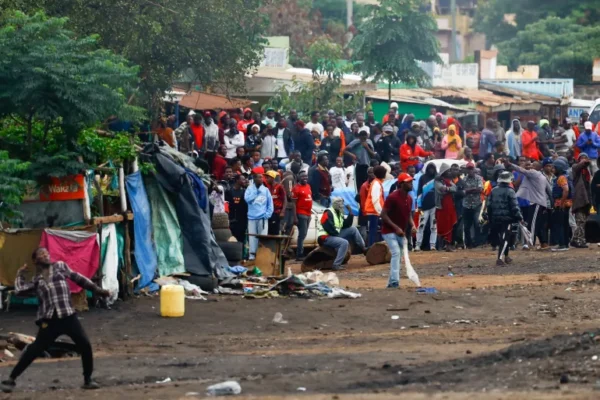
Hundreds Feared Dead in Tanzania Post-Election Protests as Opposition, UN Clash With Government Over Death Toll

Tanzania’s main opposition party, Chadema, has claimed that hundreds of people have been killed in violent protests following this week’s disputed general elections, while the United Nations says it has “credible reports” of at least 10 deaths. Chadema spokesperson John Kitoka told AFP on Friday that the party’s internal assessment put the number of deaths at roughly 700 nationwide, including around 350 in Dar-es-Salaam and more than 200 in Mwanza. The opposition said it based its figures on visits to hospitals across the country. A security source and a diplomat in the capital also confirmed that deaths were “in the hundreds.” The Tanzanian government has rejected the opposition’s claims. Foreign Minister Mahmoud Thabit Kombo denied that excessive force had been used by security agencies and insisted the government had “no official figures” of protesters killed. “I’ve not seen these 700 anywhere … there’s no number until now of any protesters killed,” Kombo said, adding that “pockets of violence and vandalism” had occurred, with government offices and vehicles attacked and electricity facilities set ablaze. The UN Human Rights Office, however, expressed alarm over reports of killings by security forces. Spokesperson Seif Magango called on Tanzanian authorities to refrain from using lethal force against demonstrators and to “make every effort to de-escalate tensions.” Later on Friday, UN Secretary-General António Guterres urged a full investigation into the allegations, citing “deep concern” over reports of disappearances and detentions ahead of the polls. Protests erupted on Wednesday in Dar-es-Salaam and other cities following elections marred by allegations of fraud and the exclusion of key opposition candidates. Witnesses reported clashes between demonstrators and police, with several vehicles, police stations, and a petrol station set on fire. The government deployed the military to the streets and imposed an internet shutdown to quell unrest. President Samia Suluhu Hassan, who assumed office in 2021 after the death of John Magufuli, faced the election without her two main challengers, Tundu Lissu of Chadema and Luhaga Mpina of ACT-Wazalendo. Both were barred by the electoral commission under controversial circumstances that opposition groups and rights organizations have condemned as politically motivated. The UN and human rights groups, including Human Rights Watch (HRW), have long warned of rising repression, disappearances, and violence against opposition figures in Tanzania. HRW recently documented multiple cases of abduction, torture, and intimidation of activists and journalists, warning that the October elections were at “great risk.” Meanwhile, in the semi-autonomous Zanzibar archipelago, the ruling Chama Cha Mapinduzi (CCM) party claimed victory, with incumbent President Hussein Mwinyi declared winner with nearly 79% of the vote. Opposition parties rejected the results, alleging “massive fraud,” as soldiers patrolled the streets amid growing unrest. As demonstrations spread nationwide, the government postponed the reopening of colleges and universities and vowed to restore order. The army chief, Jacob John Mkunda, condemned the violence and pledged that the military would work with police “to contain the situation.”

Read More

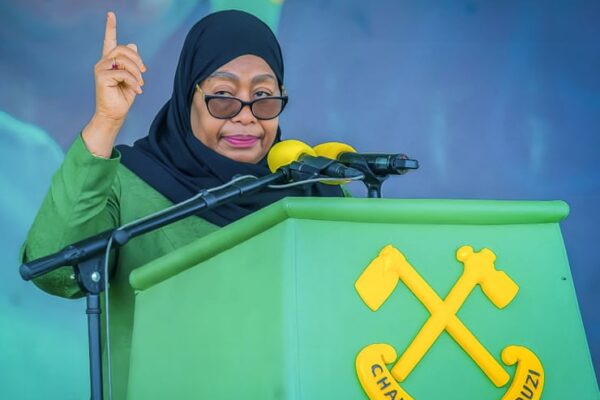
Tanzania’s Samia Suluhu Hassan Wins Second Term Amid Protests

Tanzania’s President Samia Suluhu Hassan has been declared the winner of the country’s presidential election, securing a second term in office despite widespread unrest and allegations of electoral irregularities. According to the National Electoral Commission, Samia won nearly 98% of the votes, receiving around 31.9 million of the 32 million ballots cast, with voter turnout reported at approximately 87% of the nation’s 37.6 million registered voters. Electoral chief Jacobs Mwambegele confirmed the result on Saturday, announcing, “I hereby declare Samia Suluhu Hassan as the winner of the presidential election under the Chama Cha Mapinduzi (CCM) party.” In Tanzania’s semi-autonomous archipelago of Zanzibar, incumbent President Hussein Mwinyi of CCM also won decisively with nearly 80% of the vote. Opposition parties in Zanzibar, however, accused authorities of “massive fraud,” and Mwinyi’s swearing-in ceremony is currently underway at Amaan Complex Stadium. The election period was marred by significant unrest. Demonstrators in Dar es Salaam and other major cities took to the streets, tearing down campaign posters and clashing with security forces, despite warnings from the army chief to end the protests. Most of the protests were led by young Tanzanians who condemned the election as unfair, citing the suppression of opposition leaders—one in jail and another barred from running due to technicalities. Chadema, the main opposition party, claimed that around 700 people were killed in clashes with security forces, while a diplomatic source indicated credible evidence of at least 500 fatalities. The Tanzanian government, however, has downplayed the violence, with Foreign Minister Mahmoud Kombo Thabit describing incidents as “a few isolated pockets” and asserting that security forces acted decisively. Only two main opposition candidates were allowed to contest: Tundu Lissu, detained on treason charges he denies, and Luhaga Mpina of the ACT-Wazalendo party, who was excluded on technical grounds. Sixteen smaller parties also participated but hold little political influence. The ruling CCM party has dominated Tanzania’s politics since independence and has never lost a national election. Ahead of the vote, human rights organizations, including Amnesty International, raised alarms over government repression, citing enforced disappearances, torture, and extrajudicial killings of opposition figures. The government denied these claims, insisting the election would be free and fair. Samia Suluhu Hassan, Tanzania’s first female president, assumed office in 2021 following the death of her predecessor, John Magufuli. Despite the official results, tensions remain high across the country, with heavy security presence continuing in major urban centers.

Read More
Peju Ogunmola Breaks Silence After Son’s Death, Announces Return to Nollywood

Peju Ogunmola Breaks Silence After Son’s Death, Announces Return to Nollywood

Veteran Nollywood actress Peju Ogunmola has broken her silence following the tragic death of her only son, Ayomikun Omobolanle, expressing deep gratitude to fans, family, and colleagues for their support during her time of grief. In a heartfelt video shared on social media, Ogunmola, dressed in a black shirt, spoke openly about the pain she has endured over the past two months. She admitted to being overwhelmed by depression but said the outpouring of prayers and support from people across the world gave her strength. “To my dearest fans, family, and supporters across the world. Since losing my only son two months ago, I’ve been overwhelmed by grief. But through it all, your prayers and love have carried me. I feel every message, every gesture of support, and I am truly grateful,” she said. Ogunmola went on to reflect on moving forward despite her loss. “From the bottom of my heart, I want to say a very big thank you to everybody across the world. I’m very grateful. There’s a gospel song that goes ‘You are the most high God.’ I’ve accepted my fate. Today, I rise again. Not because the pain is gone, but because I know Ayomikun would want me to,” she added. She also announced her return to the screen, reaffirming her passion and commitment to Nollywood. “My calling demands that I return to the screen where I belong. To all filmmakers, directors, producers, and colleagues in the industry, I’m back — stronger and wiser. Let’s make magic again. Ise ya!” Ogunmola’s emotional message highlights both her mourning and resilience. By sharing her journey, she honours her late son’s memory while showing her determination to continue contributing to the Nigerian film industry, inspiring fans and colleagues alike with her courage and strength.   View this post on Instagram   A post shared by OGUNMOLA ADEPEJU OMOBOLANLE 🌟🌟🌟 (@official_pejuogunmola)

Read More

Nigeria Dismisses Trump’s Allegations of Christian Persecution, Reaffirms Religious Harmony

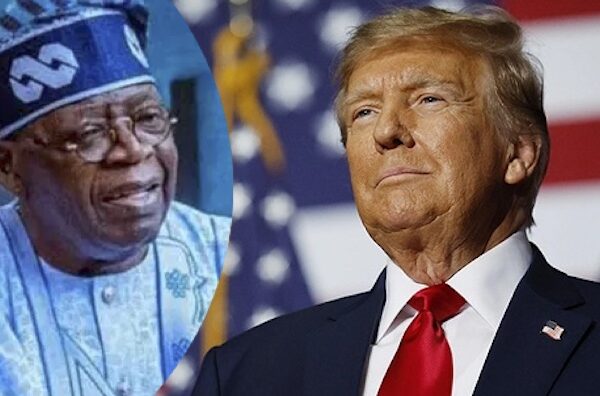
The Nigerian Government has rejected former U.S. President Donald Trump’s claims that Christians are facing an “existential threat” in the country, following his decision to redesignate Nigeria as a Country of Particular Concern (CPC). Trump made the announcement on Friday, citing alleged mass killings of Christians by radical Islamists and calling on U.S. lawmakers to investigate. “Christianity is facing an existential threat in Nigeria. Thousands of Christians are being killed… I am hereby making Nigeria a ‘COUNTRY OF PARTICULAR CONCERN,’” he stated, urging Congressman Riley Moore and the House Appropriations Committee to look into the matter. In response on Saturday, Nigeria’s Ministry of Foreign Affairs, through spokesperson Kimiebi Imomotimi Ebienfa, said the claims do not reflect the reality on the ground. “Nigeria notes the recent remarks by U.S. President Donald J. Trump alleging large-scale killings of Christians and calling for the country’s designation as a ‘Country of Particular Concern,’” the ministry said. The statement emphasized that Nigerians of all faiths have coexisted peacefully for decades. It also reaffirmed the government’s commitment under President Bola Ahmed Tinubu to combating terrorism, promoting interfaith harmony, and safeguarding the rights and lives of all citizens. Nigeria further pledged to maintain constructive dialogue with the United States to enhance mutual understanding of the country’s ongoing peace and security efforts.

Read More

Nigerian Resident Doctors Launch Indefinite Strike Over Unmet Government Agreements

The Nigerian Association of Resident Doctors (NARD) has officially begun an indefinite strike to press for the fulfillment of their demands, the association’s president, Dr. Mohammad Suleiman, announced on Saturday via NARD’s official platform. The strike follows the expiration of a 30-day ultimatum previously issued to the Federal Government, which Suleiman says repeatedly failed to honour agreements reached after several rounds of dialogue. Suleiman acknowledged the disruption the strike would cause, stating that the decision was not made lightly. “Our demands are not for personal gain or political reasons,” he said. “They are essential for the survival of Nigeria’s health system and the welfare of every citizen who depends on it.” He explained that resident doctors face excessive workloads, inadequate pay, delayed arrears, poor working conditions, and insufficient medical infrastructure—factors that directly affect patient care. “Doctors who are overworked and underpaid cannot provide the quality care Nigerians deserve,” he said. Suleiman urged Nigerians, civil society organizations, labour unions, and community leaders to support the strike, emphasizing that it is a fight for a fair and functional healthcare system. “This is not a conflict between doctors and the government. It is about ensuring that doctors can work effectively, motivated, and with the tools necessary to save lives,” he said. He warned that the long-term consequences of inaction could be severe. “If doctors are demoralized or forced to seek opportunities abroad, patients will suffer. We appeal to the government to address our demands urgently so hospitals can reopen, doctors can return to duty, and Nigerians can access the care they need.” Earlier on Thursday, resident doctors in Abuja announced their participation in NARD’s strike due to unresolved issues with the Federal Capital Territory Administration. NARD had initially declared its intention to start the indefinite strike on Saturday, 1st November 2025.

Read More