
Month: September 2025


Massive Immigration Raid at Hyundai Metaplant in Georgia Results in 475 Arrests — Most Are Korean Nationals
In the largest immigration enforcement action of the current Trump administration, federal agents raided the Hyundai Metaplant in Bryan County, Georgia, arresting 475 people suspected of being in the U.S. unlawfully. The majority are Korean nationals, according to Homeland Security Investigations (HSI), although an exact nationality breakdown has not been released. The joint operation, involving HSI, ICE, FBI, DEA, ATF, and Georgia State Patrol, was the result of a months-long criminal investigation into labor violations and immigration fraud at the construction site for Hyundai’s electric vehicle (EV) battery plant — a $5.5 billion joint venture with LG. Authorities said some individuals arrested had overstayed visas, entered the country illegally, or were working in violation of visa terms. During the raid, several tried to flee — with some jumping into a sewage pond in an attempt to escape. All were detained, with no immediate charges filed. Most of those arrested are believed to be contractors or subcontractors, not direct Hyundai employees. A Hyundai spokesperson said none of those detained were directly employed by the company and that they are “closely monitoring the situation.” Construction at the plant has been halted. LG, the joint venture partner, has not clarified how many workers were contractors or direct hires, but said it is cooperating with authorities. This facility, which spans 2,900 acres and was expected to create 8,500 jobs, has been a signature economic development for Georgia. Republican Gov. Brian Kemp, who has championed the project, said in a statement that Georgia “will always enforce the law, including all state and federal immigration laws.” In Seoul, South Korea’s Foreign Ministry expressed concern, stating that “many of our nationals were detained” and urging U.S. authorities to ensure their “rights and interests are not unduly violated.” Meanwhile, in a separate operation in New York, ICE raided a family-owned nutrition bar manufacturing plant in Cato, detaining dozens of workers — estimated at over 60 people — despite the company’s claims that all workers had proper documentation. New York Gov. Kathy Hochul condemned the raid as “outrageous” and harmful to families. These coordinated raids come as part of a broader immigration crackdown and signal a ramp-up of worksite enforcement under President Trump’s second term, with local governments and foreign allies reacting strongly to the scale and execution of these operations.
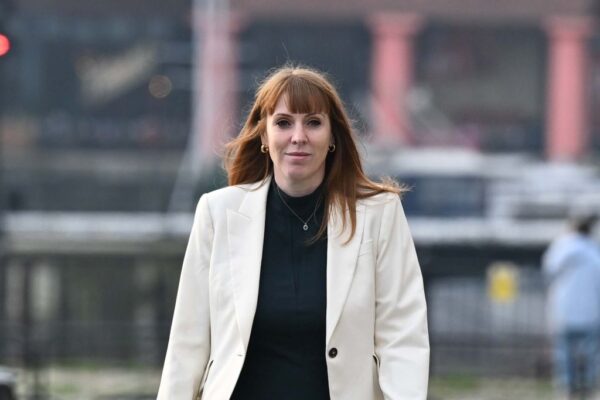
UK Deputy Prime Minister Angela Rayner Resigns
Angela Rayner has resigned as deputy leader of the Labour Party, housing secretary and deputy prime minister. It comes two days after she admitted that she should have paid more tax when she bought a flat in Hove, a seaside resort in East Sussex, earlier this year. An ethics report released on Friday said Ms Rayner’s actions were in breach the ministerial code – a set of rules which tells people with positions in the government the behaviour expected of them. In a letter Prime Minister Keir Starmer has said that he’s “very sad” that her time in government has ended but she will remain “a major figure” in the Labour Party. Opposition parties have criticised Ms Rayner and the prime minister’s handling of the situation. Ms Rayner was born in 1980 in Stockport. After leaving school she didn’t go to university but got a job in her local council in social work. She later became a representative for the trade union, Unison, which works to support workers in public services, like local government, education and health. In 2014 she was selected as the Labour Party’s candidate for Ashton-under-Lyne, and despite her party losing the 2015 general election, she won her seat and became an MP. She briefly became a member of the housing, communities and local government select committee, before going on to more senior roles. Angela Rayner bought a flat in Hove in May 2025. When someone buys a property they often have to pay a type of tax called stamp duty. Ms Rayner admitted that she made an “error” and didn’t pay the right amount of tax when she bought the flat. Government ministers are expected to follow all the rules on paying tax, and there are supposed to be serious consequences if they don’t. A report looking into what had happened found that she did not “did not heed the caution” in legal advice she received and had breached the ministerial code. She says she is sorry for not getting the right advice on how much to pay. Ms Rayner will now need to pay money to the tax authorities, which she says she will do. Ms Rayner has said that she “deeply regret[s]” her decision not to seek additional specialist tax advice given her position in the government and her “complex” personal situation. “I take full responsibility for this error,” she added, saying: “I would like to take this opportunity to repeat that it was never my intention to do anything other than pay the right amount.” Prime Minister Sir Keir Starmer seen leaving Downing Street carrying folders. In a handwritten letter from Prime Minister Keir Starmer to his former deputy, Angela Rayner, he wrote about feeling “very sad that your time as deputy prime minister, secretary of state and deputy leader of the Labour Party has ended in this way”. The PM added that Ms Rayner was “right” to refer herself to the independent adviser on ministerial standards and “right to act on his conclusion”. In a video posted to X, Conservative Party leader Kemi Badenoch has said: “It’s only because of Keir Starmer’s weakness that she wasn’t sacked three days ago”, adding: “Britain deserves better.” She said Starmer showed “no principle, no backbone” and claims “questions remain” about what the PM knew, and when. Lib Dem leader Ed Davey said it had become “clear” that her position became “untenable”, and said he hopes the government can “move on and deal with the huge problems millions of people in our country face”. Reform UK leader Nigel Farage said in a speech, “you can’t be housing secretary and avoid £40,000 of stamp duty”. He went on to accuse Labour’s cabinet ministers of being “wholly unqualified people to run our country”.
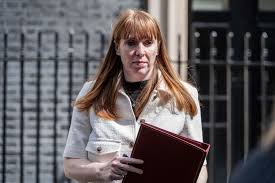
Angela Rayner Resigns After Admitting Stamp Duty Underpayment
Angela Rayner has resigned as Deputy Prime Minister, Housing Secretary, and Deputy Leader of the Labour Party after admitting she underpaid stamp duty on a second home purchase. Earlier this week, Rayner acknowledged in an interview with Sky News’ Beth Rigby that she had not paid the higher rate of stamp duty on a property in Hove, East Sussex, bought earlier this year. The property should have been classified as a second home, which would have incurred a higher tax rate. Following public scrutiny and her own referral to the prime minister’s ethics adviser, Sir Laurie Magnus, she was found to have breached the ministerial code. Sir Laurie acknowledged Rayner had acted with integrity and dedication to public service, but criticised her for not seeking appropriate tax advice sooner and only correcting the issue after intense media coverage. Rayner stated in her resignation letter to Prime Minister Sir Keir Starmer that the ongoing strain had become unbearable for her and her children. She expressed deep regret for not pursuing specialist legal advice earlier and stressed that she had never intended to underpay. She described serving as Deputy Prime Minister as the honour of her life and reflected on her working-class roots, saying: “For a teenage mum from a council estate in Stockport to serve at the highest level of government has been the honour of my life.” Rayner’s decision to step down has triggered a cabinet reshuffle. Chancellor Rachel Reeves is the only minister whose role is confirmed to be secure. Starmer responded to her resignation with a handwritten letter, saying he was “very sad” about her departure and described her as a “trusted colleague and true friend,” adding: “Even though you won’t be part of the government, you will remain a major figure in our party.” Timeline of Events: Rayner explained that a trust was created in 2020 for her disabled son, to hold the family home after an NHS compensation settlement. When she bought the Hove flat, she believed the trust’s ownership of the former family home exempted her from second-home tax liability. Legal advice later concluded otherwise. Political Fallout: The resignation sparked immediate reactions across the political spectrum. Conservative Party leader Kemi Badenoch accused Sir Keir Starmer of weak leadership, stating that Rayner’s position had been “untenable for days” and that she should have been sacked earlier. Reform UK leader Nigel Farage said the underpayment “screams entitlement” and accused Labour of failing to live up to its promise of delivering a new kind of politics. He predicted that the race to replace Rayner as deputy leader would reveal deep ideological divisions within Labour. Rayner’s departure follows other recent resignations within the Labour cabinet, including Transport Secretary Louise Haigh, Anti-Corruption Minister Tulip Siddiq, and Homelessness Minister Rushanara Ali. Meanwhile, the South Korean government, responding to separate issues concerning immigration enforcement, also made a statement today regarding Korean nationals detained in the U.S. — highlighting the breadth of international and domestic political turbulence currently facing the Labour administration.

Dorcas Koki Joins Nigeria U17 Women’s Team as Media Officer
The Nigeria Football Federation has appointed Erenayo Dorcas Koki, a journalist and football commentator with NigeriaInfo FM, as new Media Officer of the U17 women national team, Flamingos. Koki, who has under her belt, years of experience in covering local and international sporting events and programmes, has a reputation for bold story-telling, engaging analysis, and strong advocacy for women sports, especially women football. Port Harcourt-based Koki steps into the shoes left by the vibrant, highly energetic and sapient Monsurah Olatunji, who was the team’s Media Officer at last year’s FIFA U17 Women’s World Cup finals in the Dominican Republic, and who had taken over from the affable Faith Meremegbunam. Koki is intentional about bringing the Flamingos, 2022 FIFA U17 Women’s World Cup bronze medallists, closer to Nigerians and the rest of the world, by deploying skills that will ensure greater visibility for the team. “I will work with the NFF Communication department to amplify the voices of the players and coaches, to ensure the team’s journey is shared with all stakeholders countrywide and beyond. My vision is to make the Flamingos a household name, not only during tournaments but all-year round. We will tell their stories in ways that inspire pride, build fan connection, and position the team as the future of Nigeria football, by combining fresh digital content, stronger media engagement and authentic story-telling.” The Flamingos will resume camping on Sunday as they commence preparations for this year’s FIFA U17 Women’s World Cup finals, taking place in Morocco, 17th October – 8th November.
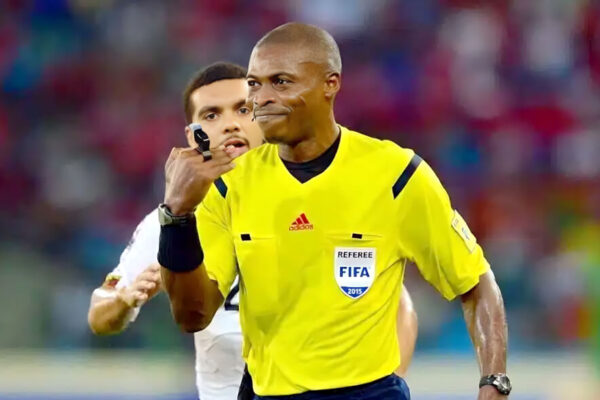
World Cup Qualifier: Gabonese Officials to Take Charge of S’Africa Vs Nigeria
World football-governing body, FIFA has appointed Gabonese official Pierre Ghislain Atcho as referee for next Tuesday’s 2026 FIFA World Cup qualifying match between Nigeria and South Africa in Bloemfontein. It is a Matchday 8 encounter in the African qualification series, and will hold at the Toyota Stadium. Atcho’s compatriots Boris Marlaise Ditsoga, Amos Abeigne Ndong and Cregue Fleury Moukagni will serve as assistant referee 1, assistant referee 2 and fourth official respectively. Olivier Safari Kabene from the Democratic Republic of Congo will serve as the referee assessor while Ugandan Mike Letti will be in the role of commissioner. Chadian official Allaou Mahamat will be the referee for Saturday’s Matchday 7 encounter between Nigeria and Rwanda at the Godswill Akpabio Stadium in Uyo, with his compatriots Bogollah Issa, Moussa Hafiz and Abdelkerim Ousmane in the roles of assistant referee 1, assistant referee 2 and fourth official respectively. Taher Abdelsalam Mahmoud from Egypt will serve as referee assessor while Bakary Jammeh from Gambia will be the commissioner.
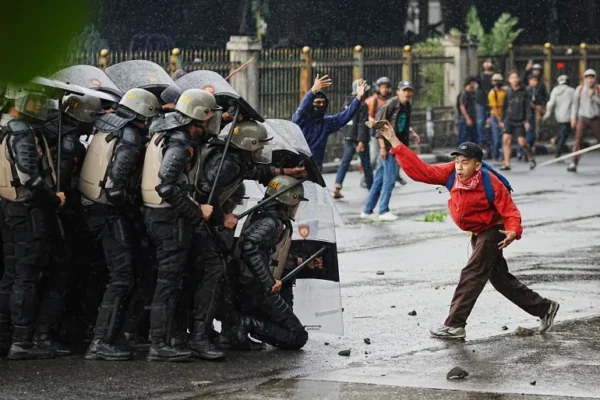
Indonesia in Crisis: Citizens Speak Out as Protests Erupt Over Inequality and Government Apathy
JAKARTA, Indonesia – A wave of nationwide protests continues to grip Indonesia, triggered by public outrage over government spending, economic hardship, and perceived indifference from the political elite. Sparked in late August by reports that members of parliament were receiving $3,000 monthly housing allowances—in a country where the minimum wage is just a fraction of that—the demonstrations have since evolved into a broader movement against inequality, corruption, and the rising cost of living. The protests, marked by clashes with riot police and widespread unrest, have spread across major islands including Java, Sumatra, Sulawesi, and Kalimantan. Public anger deepened following the death of 21-year-old food delivery rider Affan Kurniawan, who was fatally struck by a police vehicle while working during the protests in Jakarta. Kurniawan’s death became a rallying point for many, symbolizing the plight of Indonesia’s struggling working class and its growing gig economy. Several police officers are under investigation, and one has been dismissed. Amid the unrest, Al Jazeera spoke to five Indonesians from different walks of life about the underlying causes of the unrest—and what they believe must change. “Inequality Is the Root of the Problem” – Imran, Delivery Driver, North SumatraFor Imran, a food delivery worker in Langkat, the protests reflect deep-seated structural issues. “Economic, educational, and health inequalities are pushing people to the edge,” he said. “Our leaders should be solving these problems—not worsening them.” Imran described the $3,000 housing allowance for lawmakers as a stark insult to ordinary Indonesians, many of whom struggle to afford basic necessities. Following widespread backlash, parliament has since revoked the allowance, canceled plans to increase lawmakers’ salaries, and imposed a ban on non-essential overseas trips by officials. “We want peace. We want our rights respected. If that happens, the protests will stop,” Imran said. “They Forget About Us After Elections” – Rahmawati, Housewife, East KalimantanIn Samarinda, Rahmawati shared her frustration with rising food prices and government neglect. “Every year, groceries get more expensive. They [politicians] only remember us during elections,” she said. “After that, they vanish.” Despite reports of 5.12% GDP growth in Q2, everyday Indonesians say they see little improvement in their lives, particularly in rural and lower-income communities. Inflation in August reached 2.31% year-on-year, further straining household budgets. “We Need Systemic Reform” – Afifah, Women’s Rights Activist, JakartaFor Afifah, the protests go beyond economic grievances. “People are protesting the military’s growing power, job insecurity, poverty, and threats to democracy,” she said. “There have been protests all year, not just now.” She condemned the government’s violent crackdown on peaceful demonstrators, including the use of tear gas and water cannons on university campuses. “The police must respect our right to protest,” Afifah urged. “This country needs reform—from the economy to the environment and governance. And women must be included in that change.” “Military Expansion in Aceh Is a Red Line” – Muhammad, Social Worker, Banda AcehIn Aceh, a region scarred by decades of conflict with the Indonesian military, protests have also taken place—despite typically avoiding national demonstrations. “We protested peacefully against plans to build five new military battalions here,” said Muhammad, a social worker in Banda Aceh. “It’s very sensitive for us. We already endured 35 years of military oppression.” President Prabowo Subianto, a former general with ties to Indonesia’s authoritarian past, has faced criticism for his push to expand the military’s role in civilian affairs. Since taking office in October 2024, his administration has reportedly established dozens of new battalions, with plans for hundreds more. “The Emperor Has No Clothes” – Political AnalystAccording to a prominent Indonesian political analyst, much of the public anger stems from broken promises. “Prabowo ran as an economic reformer, but now many feel betrayed,” the analyst said. “He slashed $18 billion in public spending—especially in education and healthcare—while funding a $10 billion free school lunch program.” The analyst added that the president still has an opportunity to reverse course. “To regain public trust, he must act. That means holding corrupt officials accountable, prosecuting excessive use of force, and delivering on his economic promises. Fire some people. Arrest others. Show the people he’s serious.” A Nation at a CrossroadsThe protests show no signs of slowing. In Makassar, Sulawesi, demonstrators reportedly set fire to a regional government building, resulting in at least three deaths. In Jakarta, parliamentarians’ homes and even the residence of Finance Minister Sri Mulyani Indrawati were targeted by angry crowds. President Prabowo, in a televised address, condemned the unrest, warning that acts of “treason and terrorism” would not be tolerated. But for many Indonesians, harsh rhetoric does little to address the deeper crisis. “People are fed up,” Rahmawati said. “We want leaders who care about us—not just themselves.”
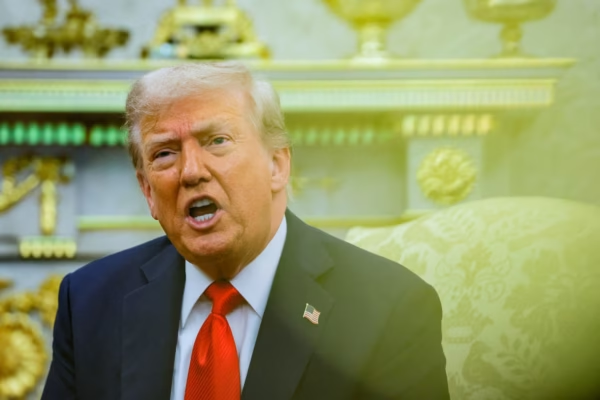
Trump and Putin Align in Blame Game as Ukraine Peace Talks Stall
Amid stagnant peace efforts in Ukraine, US President Donald Trump and Russian President Vladimir Putin have found rare alignment—blaming Europe for the continued impasse. This comes three weeks after their high-profile summit in Alaska, which ended with no concrete outcomes. In a Thursday call with European leaders, Trump urged the continent to do more to cut economic ties with Russia, particularly oil purchases, which he claimed generated €1.1 billion for Moscow in just one year. “Europe must stop purchasing Russian oil that is funding the war,” a White House official stated. The call followed Trump’s comments that he plans to speak with Putin again, even as the Russian leader continues to ignore multiple peace deadlines. Trump’s approach, while forceful in tone, has been vague on enforcement. “If we’re unhappy about it, you’ll see things happen,” he said, without elaborating. Despite Europe’s efforts—like last week’s Paris summit where 26 nations agreed to provide forces for a future peacekeeping mission—Trump’s administration has offered limited commitment and continues to pressure Europe and China, without applying equivalent pressure to Beijing directly. Double Standards and Shifting Alliances Trump’s foreign policy is increasingly seen as transactional and unpredictable. While demanding European action on Russian oil, he has refrained from sanctioning China, citing ongoing trade talks. Meanwhile, India has faced punitive tariffs from Trump for buying Russian oil—further straining relations with the strategic partner and pushing New Delhi closer to Beijing and Moscow. This week, Chinese President Xi Jinping gave Indian Prime Minister Narendra Modi a warm welcome, with Modi even seen riding in Putin’s limousine—mirroring Trump’s recent public camaraderie with the Russian president. Russia Pushes for Division Putin, meanwhile, has ramped up efforts to fracture NATO unity, accusing Europe of “hysteria” over alleged Russian military threats. “Russia has never had, does not have, and will never have any desire to attack anyone,” he claimed during meetings with leaders like Slovak Prime Minister Robert Fico in Beijing. In a symbolic echo of Alaska, Putin warned Europe not to “throw a wrench” in his negotiations with Trump. Simultaneously, suspected GPS jamming of a plane carrying EU Commission President Ursula von der Leyen was blamed on Russia—though Moscow dismissed the claim as “fake.” Security Guarantees, but No Breakthrough At the Paris summit, French President Emmanuel Macron announced that 26 countries had pledged contributions to a future peacekeeping or reassurance force for Ukraine, should a deal be reached. Macron also emphasized the need for an “American safety net”, indicating that US support—however limited—remains crucial. However, no firm meeting between Putin and Ukrainian President Volodymyr Zelensky is in sight. While Putin offered to host Zelensky in Moscow, Kyiv views the offer as a non-starter, citing security risks and a likely political trap. There are also concerns that Putin could weaponize a bilateral meeting to undermine Zelensky in Trump’s eyes. Analysis: Big Rhetoric, Few Results Despite dominating headlines with high-stakes diplomacy, Trump appears increasingly frustrated with the lack of progress—yet unwilling to deploy the leverage or consistency needed to change course. His tendency to scold allies, court adversaries, and avoid firm commitments has left both Ukraine and US allies guessing. As Putin continues to exploit divisions and as Trump balances contradictory goals, the only clear outcome is continued gridlock, while Ukraine waits for real peace—and real guarantees.