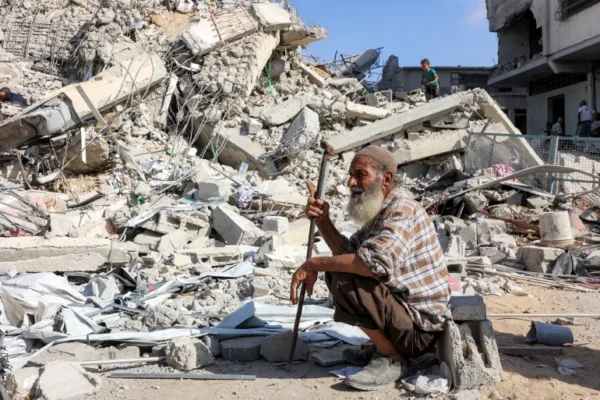
Israel bombs more Gaza City high-rises after forced evacuation orders

Israel Levels More High-Rises in Gaza City Amid Forced Evacuations and Rising Civilian Death Toll

GAZA CITY – September 6, 2025Israeli forces continued their bombardment of Gaza City on Saturday, targeting and demolishing high-rise buildings following mass evacuation orders issued to residents. The latest strike flattened the 15-storey Soussi Tower in the Tal al-Hawa neighbourhood, just opposite a UNRWA facility. The Israeli military released a map marking more high-rises for destruction, claiming—without presenting evidence—that Hamas operatives used the targeted structures for intelligence gathering and tunnel operations. Gaza’s Government Media Office rejected the claims as “systematic deception” aimed at justifying the destruction of civilian infrastructure and displacing Palestinians. Al Jazeera’s correspondent in Gaza, Hani Mahmoud, reported rising panic among residents, many of whom were given as little as 30 minutes to evacuate their homes before the strikes. Civilian Deaths Mount as Urban Destruction Escalates According to medical sources, at least 67 people have been killed since Saturday morning, 45 of them in Gaza City alone. The Ministry of Health also confirmed that six more Palestinians, including children, died from starvation in the past 24 hours, raising the famine death toll to 382, amid Israel’s continued blockade and siege. UNICEF spokesperson Tess Ingram described the situation as “an enormous threat” to nearly one million people in Gaza City, noting that half of the population are children. “Life is becoming almost impossible for them,” Ingram told Al Jazeera. Save the Children reported a devastating statistic: at least one child has been killed every hour on average since the war began nearly two years ago, calling it a “horrific new low.” Since the start of Israel’s military campaign in October 2023, over 64,368 Palestinians have been killed, and 162,367 wounded, according to Gaza health authorities. So-Called ‘Safe Zones’ Also Targeted Despite designating parts of southern Gaza—such as the coastal al-Mawasi area—as “humanitarian zones,” Israeli forces have continued to strike those regions. On Saturday, two people were killed in an Israeli air strike on a tent sheltering displaced families in al-Mawasi near Khan Younis. Gaza’s Ministry of Interior has warned residents not to trust Israeli-declared safe zones, calling them a pretext for forced displacement and noting repeated attacks on designated humanitarian areas. “We are walking not only on ruins but also on dead bodies of our loved ones,” said Aqeel Kishko, a Gaza City resident returning to the devastated Zeitoun neighbourhood. Others echoed the sentiment of total loss. “What we built in 50 years was flattened in five days,” Kishko added.“There is nothing to return to,” said resident Nohaa Tafish.“It’s as if the entire Zeitoun neighbourhood was hit with a nuclear bomb,” said Ahmed Rihem. International Condemnation Grows Amid mounting global criticism, UNRWA spokesperson Tamara Alrifai described the current Israeli offensive as “an incessant campaign to raze entire neighbourhoods” and wipe out entire families. Despite calls for a ceasefire, Israel appears determined to seize full control of Gaza City, raising fears of further mass casualties and irreversible destruction of Palestine’s largest urban centre.
Read More

Lagos APC Slams Peter Obi Over Criticism of Tinubu’s Vacation, Urges ‘Responsible Opposition’

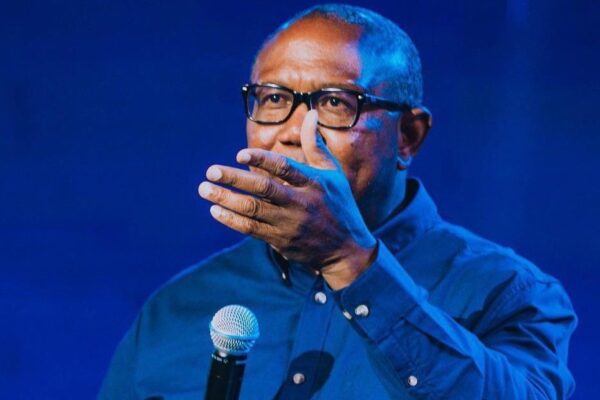
LAGOS, NIGERIA – The Lagos State chapter of the All Progressives Congress (APC) has issued a stern warning to former presidential candidate of the Labour Party, Mr. Peter Obi, urging him to adopt a more constructive approach to opposition politics and refrain from what it described as “habitual knee-jerk reactions” to national developments. The warning was contained in a statement released by the APC’s Lagos State Publicity Secretary, Mogaji Seye Oladejo, in response to Obi’s recent remarks questioning President Bola Ahmed Tinubu’s short private vacation and its alleged impact on national security. Oladejo criticized Obi’s frequent public comments on national issues, accusing him of seeking “cheap relevance” and portraying himself as a moral authority while offering little in the way of substantive policy contributions. “Must Peter Obi comment on everything?” Oladejo asked. “Nigerians are not deceived. His constant moralising of the President’s every move is less about patriotism and more about political desperation.” He described Obi’s approach as reactionary and populist, reducing complex governance issues to “social media talking points,” rather than engaging in serious, solutions-oriented discourse. The APC spokesman also defended President Tinubu’s decision to take a brief vacation, insisting that the president remains fully in charge of the country’s affairs. “In modern governance, leaders remain in constant communication with their security and intelligence teams, regardless of location. Mr. Obi knows this, but prefers posturing over pragmatism,” Oladejo stated. He further cautioned Obi’s aides to carefully assess the former governor’s public engagements, warning that his pattern of criticism may harm his image as a credible opposition figure. “Leadership requires knowing not only what to say, but also when and how to say it. Constant agitation and reflexive commentary do not equal leadership—they undermine it,” Oladejo said. The APC reiterated its commitment to delivering on national priorities including economic recovery, national security, and public sector reforms, while dismissing Obi’s contributions as lacking depth. “Peter Obi’s comments amount to noise, not leadership or patriotism,” Oladejo concluded. “If he has meaningful contributions to make, let him present them responsibly. Otherwise, silence is an honourable option. For us in the APC, under the leadership of President Bola Ahmed Tinubu, our focus remains on governance, not political theatre.”

Read More
Ezekwesili, Bakare Advocate Value-Driven Leadership at Launch of Citadel School’s Advanced Diploma Programme

Ezekwesili, Bakare Advocate Value-Driven Leadership at Launch of Citadel School’s Advanced Diploma Programme

By Kamal Yalwa: LAGOS, NIGERIA Former Minister of Education, Dr. Obiageli Ezekwesili, and Founder of the Citadel School of Government (CSG), Pastor Tunde Bakare, have called for the grooming of a new generation of leaders committed to values, competence, and nation-building. They made this call on Saturday during the official launch of the Citadel School of Government and the onboarding ceremony for the pioneer class of its Advanced Diploma in Public Leadership and Statecraft, held at the Citadel Multipurpose Hall, Oregun, Ikeja, Lagos. The nine-month diploma programme is a collaborative initiative between the Citadel School of Government and the University of Lagos Business School (ULBS). The programme, according to the organisers, is designed to bridge Nigeria’s leadership gap by equipping participants with the ethical grounding and practical tools necessary for effective public sector governance. Dr. Ezekwesili, who delivered the keynote lecture, expressed deep concern over what she termed the “democratisation of corruption” in Nigeria. She lamented the country’s failure to address the institutional decay undermining good governance. “We have no business to fail; failure is not our destiny,” she said. “Corruption is corrosive. For years, people pretended not to see what was happening until it became systemic and normalised. Now everybody says, ‘If you can’t beat them, join them.’ Join who?” She stressed that character must be the foundation of leadership. “No matter how competent you are, if you lack character, you will go nowhere,” she said, urging the incoming students to reject compromise and embody the values of integrity and service. Pastor Bakare, in his remarks, described the programme as a bold step toward raising “a new breed without greed” and preparing young leaders to drive transformative change across Nigeria and beyond. “Our mission is to raise nation builders—leaders grounded in values and equipped with the competencies to champion a new philosophy of governance,” he said. “With your induction into this programme, I believe Nigeria is on the brink of experiencing a new wave of transformative leadership. We are building a leadership pipeline to operate from the local level to global platforms.” He noted that the partnership with the University of Lagos ensures participants benefit from academic excellence and real-world policy exposure. The Memorandum of Agreement (MoA) between the two institutions was signed in June by UNILAG Vice-Chancellor, Prof. Folasade Ogunsola, and CSG Board Chairman, Pastor Bakare, alongside other key officials. Pastor Bakare also highlighted that the Advanced Diploma programme will combine classroom instruction with fieldwork, mentoring, and policy simulations. The goal, he said, is to produce public leaders capable of thinking globally while acting locally. He commended the University of Lagos Business School for its collaboration, calling it “a model of how the ivory tower can meet the policy roundtable to generate solutions.” Bakare concluded by urging the pioneer class to prepare for a challenging but rewarding journey. “You have just accepted the call of destiny by joining this pioneer cohort. The road will not be easy, but the opportunities for service and leadership are immense,” he said. The first cohort of the Advanced Diploma in Public Leadership and Statecraft begins this month.

Read More
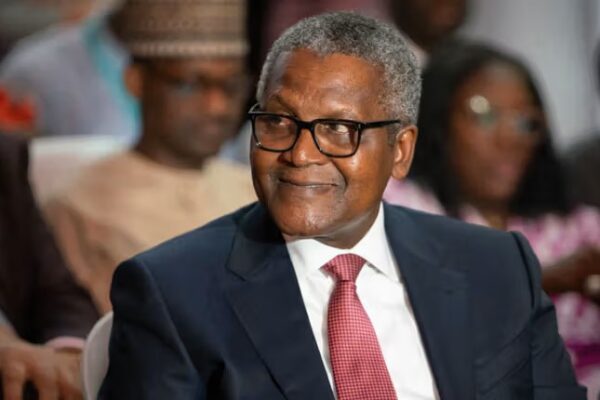
Dangote By Prince Iroka

Dangote advocates urgent prioritisation of manufacturing over raw materials export in Africa…..…As Dangote marks Special Day at ongoing Intra-African Trade Fair in Algiers

By Prince Iroka Africa’s wealthiest man and President of Dangote Industries Limited, Aliko Dangote, has called on Africans to leverage on internal strengths and global opportunities to fill existing gaps, and adopt a deliberate re-orientation toward industrialisation of Africa’s manufacturing sector, as a panacea against the current global economic instability. The renowned entrepreneur encouraged operators in the manufacturing and industrial sectors across the continent to embrace a fundamental shift in mindset and develop robust regional value chains and deepen intra-African trade as inward solutions to boost overall development across the continent. Dangote, who noted that current geo-political tensions and trade wars have caused major economies to reevaluate their traditional trade partnerships with a view to diversifying their supply chains, also urged African exporters to benefit from the current process to fill the gap by competitively supplying the required products. These recommendations were contained in Dangote’s welcome address at the company’s Special Day at the ongoing 4th Intra-African Trade Fair holding in Algiers, Algeria, where he was represented by his Special Adviser and Representative, Engr. Ahmed Mansur. “I am glad to be here at the 4th Intra-African Trade Fair (IATF). I am immensely grateful to the organisers – not only for inviting me and giving me the opportunity to speak – but also for going a step further by dedicating this remarkable day to my organisation, Dangote Group. To have today officially set aside as Dangote Day is both an honour and a privilege. “I thank the conveners – The African Export Import Bank, the African Union Commission and the Africa Continental Free Trade Area Secretariat – for organising this event. We appreciate the invaluable contributions you have made and the excellent work you continue to do in promoting, facilitating, and deepening trade and investment across the continent”, Dangote added. According to him, “this year’s theme, “Gateway to New Opportunities,” resonates deeply as a powerful reminder of the huge potential and prospects that abound across the African continent. For too long Africa’s resources have been exported as primary commodities in their raw and unrefined state with limited domestic processing or beneficiation. “There must be a fundamental shift in mindset and a deliberate re-orientation toward industrialisation and the development of Africa’s manufacturing sector. While this was always necessary in the past, it is even more urgent today, given the alarming rise in youth unemployment, and the need for sustainable, inclusive growth”, he added. The business tycoon observed that current geo-political tensions and trade wars have caused major economies to reevaluate their traditional trade partnerships with a view to diversifying their supply chains. “African exporters could benefit if they can fill the gap by competitively supplying the required products. Furthermore, global instability has encouraged African nations to look inward and actively pursue greater regional self-reliance. This inward focus can catalyse the development of robust regional value chains and significantly deepen intra-African trade”, he advised. “At Dangote, we are very proud of our Afrocentric posture, driven by an unwavering commitment to the continent’s growth and industrial transformation. We have added value to limestone and created the largest cement company in sub Saharan Africa with an aggregate cement production capacity of about 52MMtpa across 10 countries,” Dangote stated. “Similarly, our 3MMtpa urea plant has contributed to the attainment of fertiliser self-sufficiency. Nigeria, once solely reliant on imports is now a net exporter of granulated urea to destinations in Africa as well as to South America, North America and Europe. “More recently, we have witnessed the commencement of operation of Africa’s biggest oil refinery – also the world’s largest single-train facility, with a capacity of 650kbpd. This landmark project is gradually reducing the region’s long-standing dependence on imports of refined petroleum products, particularly from Europe, while also generating surplus for export to global markets. As Africa becomes more self-sufficient in energy it should reduce our vulnerability to external shocks and supply disruptions.“Africa’s potential and prospects are immense. However, this potential will only be fully actualised if individual nations take deliberate steps to improve their business environment. Unlocking new economic opportunities requires the implementation of appropriate policy reforms, investment in infrastructure, and attractive sector wide incentives to facilitate the inflow of private capital” Dangote concluded. At the Dangote Special Day, which drew admirers and various attendees, various Business Units of the conglomerate such as Dangote Cement, Dangote Sugar, Dangote Salt (NASCON), Dangote Fertiliser, Dangote Polypropylene, and Dangote Packaging did presentations and urged greater collaboration among trade partners and manufacturers across Africa for the development of the continent.

Read More
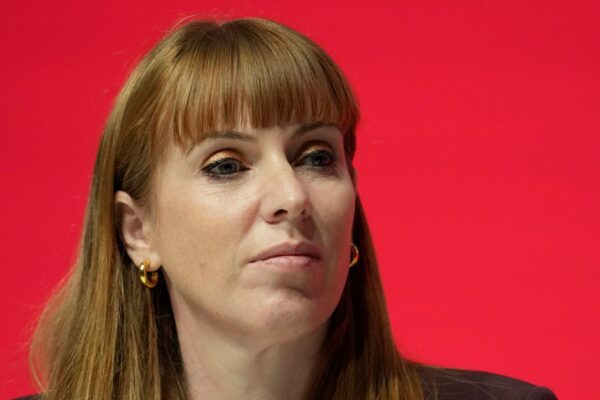
Lammy, Cooper and Mahmood get new jobs in major reshuffle after Rayner's resignation

Lammy, Cooper, and Mahmood Take Key Roles in Major Reshuffle After Rayner’s Resignation

British Prime Minister Keir Starmer has initiated a sweeping cabinet reshuffle following the departure of Angela Rayner, who resigned from her posts as Deputy Prime Minister, Housing Secretary, and Deputy Labour Leader amid a stamp duty tax controversy. David Lammy, previously serving as Foreign Secretary, has been elevated to the position of Deputy Prime Minister and simultaneously appointed Justice Secretary. His promotion at the center of the reconfiguration underscores his standing as a trusted ally to Starmer. Assuming Lammy’s previous role, Yvette Cooper has been appointed Foreign Secretary, marking a significant shift from her prior position as Home Secretary. Meanwhile, Shabana Mahmood, formerly the Justice Secretary, now heads the Home Office, taking over responsibilities for national security and immigration. The reshuffle also introduces new faces to other major departments. Steve Reed steps into the Housing Secretary role vacated by Rayner. Pat McFadden becomes the new Work and Pensions Secretary, leading a newly created super-ministry that also incorporates the education department’s skills portfolio. Additional changes include Peter Kyle as Business Secretary, Liz Kendall overseeing Science and Technology, Emma Reynolds taking on Environment, and Douglas Alexander being named Scotland Secretary in place of Ian Murray, who has left government. Jonathan Reynolds is now Chief Whip, with Sir Alan Campbell replacing him as Leader of the House of Commons. Chancellor Rachel Reeves remains steadfast in her role as the only minister whose position is guaranteed in the new lineup, providing stability within the leadership team. This reshuffle comes as Starmer seeks to reset the government’s momentum and reinforce his inner circle with trusted allies. It marks the first time that the three highest offices beneath the Prime Minister—Chancellor, Foreign Secretary, and Home Secretary—are all held by women.

Read More

Angela Rayner May Be Off the Frontline But She Remains a Force in the Labour Party – Analysis

Angela Rayner’s resignation marks a profound loss for Sir Keir Starmer’s government — a fact made all the more apparent by the prime minister’s deeply personal, handwritten letter to his former deputy. Her departure was not something he wanted, and it is clear he regrets it. Rayner was more than just Starmer’s deputy; she was a powerful figurehead on the Labour left, a symbol of working-class representation, and a political asset who lent credibility to Starmer’s centrist project in parts of the party that might otherwise have dismissed it. Her exit from government — triggered by her failure to pay the correct amount of stamp duty on her second property — leaves a significant gap. While Sir Laurie Magnus, the prime minister’s standards adviser, found she breached the ministerial code, he acknowledged that she acted with integrity and had shown dedicated public service. Despite her misstep, Rayner remains a politician of considerable stature. Though she is wounded politically, her move to the backbenches does not mean she is out of the picture. If she chooses to rebuild her political career, she could emerge as a renewed and compelling voice in the party. Her roots in the trade union movement and her status as a self-made figure — from teenage single mum to deputy prime minister — still resonate deeply with Labour members and supporters. Whether she seeks a return to the frontline or carves out a new role, she remains influential. While there is no indication that Rayner will become disloyal to Starmer, her presence alone could shape the party’s direction. She is a figurehead, whether she wants to be or not. The optics of her departure are challenging. It allows political opponents to question Labour’s commitment to tax fairness at a time when property taxes may be on the table in the next Budget. And her resignation has also triggered a deputy leadership race — an elected role — which could expose divisions between Labour’s left and centrist factions. As the saying goes: divided parties don’t win elections. Labour will now have to navigate a visible and likely contentious contest to replace Rayner — a reminder that internal tensions still simmer beneath the surface of Starmer’s leadership. Yet, amid the upheaval, the prime minister appears to be using this crisis as a moment to reset. In a bold and sweeping reshuffle that caught even serving ministers off guard, Starmer overhauled his top team. Chancellor Rachel Reeves remains in post, but key figures have been reassigned, and the leadership’s tone has shifted. Shabana Mahmood has been appointed Home Secretary with a mandate to tackle the small boats crisis, and Pat McFadden, a close Starmer ally, now leads a new super-ministry focused on welfare and employment. David Lammy, Starmer’s longtime friend and former campaign manager, has been elevated to Deputy Prime Minister. Jonathan Reynolds has become Chief Whip — a key post for a leader navigating tricky backbench relations. A senior Labour figure described the reshuffle as the beginning of a tighter, more trusted inner circle — a sort of “kitchen cabinet” designed to offer the prime minister reliable counsel and consistent political support. “What he needs are politicians he feels comfortable with,” one insider said. “This is about the PM reaching for the right kind of support and a team he trusts and can rely on.” Angela Rayner may no longer sit around that table, but her influence in British politics has not vanished. Her future on the backbenches could shape the party’s next chapter, especially if she chooses to fight her way back. For Starmer, this reshuffle represents a gamble — a necessary act of decisiveness for a leader often criticised for caution. Whether it will restore momentum and political strength remains to be seen. But for now, Rayner’s absence is a powerful reminder of both the fragility of public trust and the volatile nature of political life — where even the most compelling figures can fall, only to potentially rise again.

Read More
Why doesn’t Google Maps work in one of Asia’s most developed, tourist-friendly countries?

Why Google Maps Doesn’t Work Properly in Asia And South Korea

Despite being a global tech hub, South Korea restricts Google Maps from offering full navigation services like driving or walking directions. This forces visitors to rely on local apps such as Naver Map and Kakao Map. The core issue is that Google cannot access South Korea’s detailed 1:5,000 scale map data, which is necessary for turn-by-turn navigation. Google has been requesting access since 2016, but the South Korean government has consistently denied these requests. The official reason given is national security. Authorities argue that exporting detailed map data to foreign servers could reveal sensitive military and government sites, a concern heightened by the country’s proximity to North Korea. However, critics say these risks are exaggerated, especially since the same data is already used by domestic apps and satellite imagery is widely available from third-party providers. Beyond security, broader issues are at play. South Korea is keen on maintaining digital sovereignty and supporting its domestic tech industry. Companies like Kakao and Naver have raised concerns that Google’s entry could dominate the market and threaten local businesses. Moreover, there’s little domestic pressure to approve Google’s request, as most South Koreans already rely on local apps, and the change would primarily benefit foreign tourists. For tourists, this limitation can be frustrating. Language barriers and inconsistent English translations in Korean apps make them harder to use. Real-time walking directions and easy-to-search locations, standard in Google Maps elsewhere, are often unavailable. A South Korean government council is expected to decide on Google’s latest request by October 2025. Most analysts expect another rejection unless Google offers significant security concessions or the South Korean government sees strategic value in approving it, especially amid ongoing trade negotiations with the United States. This situation reflects a broader debate about data ownership, national interest, and the influence of global tech giants. As more countries assert control over their digital infrastructure, similar cases may emerge elsewhere in the world.

Read More