South Africa vs Nigeria: World Cup qualifier – start, team news and lineups

South Africa vs Nigeria: Lineups, Team News and What’s at Stake in Crucial World Cup Qualifier

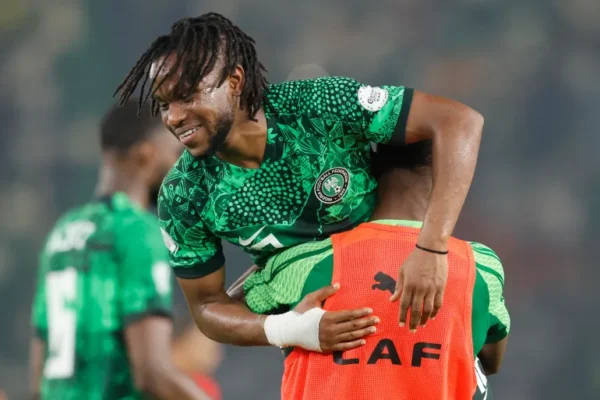
Bloemfontein, South Africa — A high-stakes clash awaits as Group C leaders South Africa host Nigeria in a pivotal CAF 2026 FIFA World Cup qualifier on Tuesday at the Free State Stadium in Bloemfontein. With only two matchdays remaining in the first round of African qualifiers, the outcome of this match could reshape the group standings and heavily influence who makes it to North America for the expanded 48-team tournament. Match DetailsWho: South Africa vs NigeriaCompetition: CAF 2026 FIFA World Cup Qualifier – Group CVenue: Free State Stadium, BloemfonteinDate: Tuesday, September 9Kick-off: 6:00 PM local time (16:00 GMT)Live coverage: Al Jazeera Sport live text commentary from 13:30 GMT Group Leaders: South Africa’s Road to the World Cup Bafana Bafana come into the fixture unbeaten at home during this qualifying campaign, with solid wins over Benin (2-1), Zimbabwe (3-1), and Lesotho (3-0). They currently sit top of Group C with 16 points and a +8 goal difference, five clear of Nigeria. A victory on Tuesday would all but guarantee qualification, leaving only a minimal mathematical chance for rivals to catch up. But head coach Hugo Broos will be forced to reshuffle his defense after injuries to Nyiko Mobbie and Thabo Brendon Moloisane. Kaizer Chiefs’ Thabiso Monyane is expected to deputise, while Lyle Foster, fresh off a goal and assist against Lesotho, will lead the attack. Nigeria’s Must-Win Mission For the Super Eagles, the road to World Cup qualification is narrowing. Currently third in the group with 10 points, Nigeria must beat South Africa to revive their chances of topping the group and qualifying directly. Their challenge, however, is complicated by the absence of star striker Victor Osimhen, ruled out due to a chin injury sustained during their 1-0 win over Rwanda on Friday. Head coach Eric Chelle is likely to turn to Tolu Arokodare to spearhead the attack, with Ademola Lookman, Moses Simon, and Alex Iwobi expected to provide attacking support. Cyriel Dessers and Samuel Chukwueze are also options off the bench. Group C Standings (After 7 Matches)South Africa: 16 pts (+8 GD)Benin: 11 pts (0 GD)Nigeria: 10 pts (+2 GD)Rwanda: 8 pts (-1 GD)Lesotho: 6 pts (-4 GD)Zimbabwe: 4 pts (-5 GD) What’s at Stake? Only the group winner qualifies directly for the 2026 FIFA World Cup. The four best runners-up across the nine CAF groups will enter an intercontinental playoff for one final African spot. Nigeria must win against South Africa and in their remaining matches against Lesotho and Benin to have any hope of winning the group or securing a playoff place. Last Five Matches South Africa: W W W W WNigeria: D W D D W Head-to-Head Record Since 2004Played: 13Nigeria Wins: 6South Africa Wins: 1Draws: 6 The last time South Africa and Nigeria met in Bloemfontein was during the 2019 AFCON qualifiers, where Nigeria won 2-1. Predicted Starting LineupsSouth Africa (4-2-3-1): Williams (GK); Mdunyelwa, Ndamane, Monyane, Modiba; Mokoena, Mbatha; Nkota, Mbule, Appollis; FosterNigeria (4-3-3): Nwabali (GK); Aina, Fredrick, Bassey, Onyemaechi; Onyedika, Ndidi, Iwobi; Simon, Lookman, Arokodare How to Follow Follow Al Jazeera Sport for pre-match coverage from 13:30 GMT, followed by live text commentary, in-depth analysis, and post-match reactions. This clash is more than a qualifier — it’s a battle for continental supremacy and survival. Can Nigeria revive their campaign without Osimhen? Or will South Africa seal qualification at home in front of a roaring Bloemfontein crowd?
Read More
Supreme Court allows Trump to continue ‘roving’ ICE patrols in California

Supreme Court Backs Trump’s Roving ICE Patrols in California Sparking Legal and Civil Rights Concerns

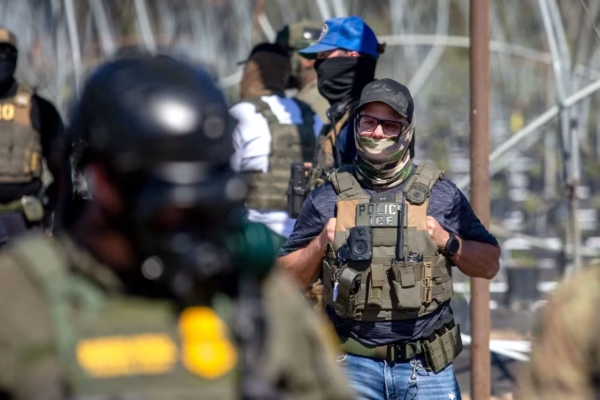
Washington, D.C. — The U.S. Supreme Court on Monday sided with President Donald Trump’s administration, allowing federal immigration agents to continue controversial “roving patrols” across Southern California, despite lower court rulings that said the practice likely violates constitutional protections. The court’s unsigned order offered no explanation, but came over a forceful dissent from the three liberal justices—Sonia Sotomayor, Elena Kagan, and Ketanji Brown Jackson—who warned the ruling paves the way for widespread racial profiling and civil rights abuses. Controversial Tactics Resume The case centered on aggressive immigration enforcement actions by U.S. Immigration and Customs Enforcement (ICE) agents, who allegedly stopped and interrogated Latino individuals—some of them U.S. citizens—at farms, bus stops, and other locations without reasonable suspicion. A federal district court and the Ninth Circuit Court of Appeals had previously restricted such stops, ruling that targeting individuals based largely on ethnicity or location likely violated the Fourth Amendment. Monday’s Supreme Court ruling lifts that restriction for now, affecting seven counties in Southern California. In a concurring opinion, Justice Brett Kavanaugh argued that ethnicity can be one of several factors used to establish “reasonable suspicion” in immigration enforcement, stating: “Apparent ethnicity alone cannot furnish reasonable suspicion… [but] it can be a relevant factor when considered along with other salient factors.” Kavanaugh also emphasized that ICE agents are allowed to “briefly stop the individual and inquire about immigration status.” Sotomayor: ‘Freedoms Are Lost’ Justice Sonia Sotomayor, the court’s first Hispanic justice, issued a blistering dissent, condemning what she described as a “papers please” regime that targets people based on appearance, language, or low-wage employment. “We should not have to live in a country where the government can seize anyone who looks Latino, speaks Spanish, and appears to work a low-wage job,” she wrote. Sotomayor cited internal statements from DHS officials, including Homeland Security Secretary Kristi Noem, who called the district judge an “idiot” and vowed that ICE operations would continue unchanged. She also referenced inflammatory rhetoric from ICE leadership, including promises to “go even harder now” and social media videos showing raids at car washes and farms. “These are not brief stops,” Sotomayor wrote. “They involve firearms, physical violence, and detentions in warehouses—with no legal counsel.” ACLU and Civil Rights Groups Condemn Ruling The American Civil Liberties Union (ACLU), which helped lead the legal challenge, called the decision “dangerous” and said it legitimizes racial profiling under the guise of immigration enforcement. “For anyone perceived as Latino by an ICE agent, this means living in fear of violent arrest and detention,” said Cecillia Wang, ACLU National Legal Director. Legal, Political Implications The ruling is the latest in a growing number of emergency appeals from the Trump administration to reach the high court since Trump began his second term in January. Many of these cases, including this one, have bypassed traditional appellate processes and arrived at the court with little public briefing or oral argument. Sotomayor criticized the court’s increasing reliance on such shadow docket rulings, writing: “The court’s appetite to circumvent the ordinary appellate process and weigh in on important issues has grown exponentially.” While the ruling is technically temporary—pending a full hearing—it will be widely interpreted as a green light for aggressive enforcement tactics across the country. Immigration advocates warn it could encourage ICE agents nationwide to resume or expand similar operations, using race and language as key triggers for stops. The Department of Homeland Security praised the ruling. DHS spokesperson Tricia McLaughlin called it “a win for the safety of Californians and the rule of law.” What’s Next? With the case now cleared for continued enforcement pending further litigation, immigrant communities in California brace for renewed ICE activity. Civil rights groups plan to continue legal challenges and increase public pressure on Congress to impose limits on immigration enforcement powers. Meanwhile, national attention will turn to whether the Supreme Court takes up the case formally—and if it sets new precedent on immigration stops and racial profiling.

Read More
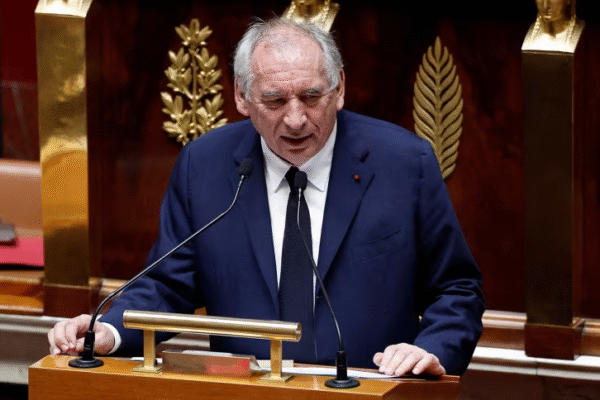
French Government Collapses After PM François Bayrou Loses Confidence Vote

French Government Collapses After PM François Bayrou Loses Confidence Vote

Paris, France — French Prime Minister François Bayrou has been ousted after losing a parliamentary confidence vote, deepening France’s political and economic crisis and leaving the country without a functioning government. In a dramatic vote on Monday, 364 lawmakers voted against Bayrou’s leadership—well above the 280 needed to topple the government—while 194 backed him. The vote was triggered by Bayrou himself in a last-ditch effort to push through a controversial €44 billion ($51 billion) austerity plan, which included scrapping two public holidays and freezing government spending. Bayrou, who served just nine months in office, is expected to submit his resignation to President Emmanuel Macron on Tuesday. He follows former Prime Minister Michel Barnier, who was also removed by a no-confidence vote in December 2024. Markets React, Fiscal Uncertainty Grows The collapse of the government has rattled financial markets. Yields on French government bonds have surged past those of Spain, Portugal, and Greece—countries once at the heart of the eurozone debt crisis. A potential downgrade of France’s credit rating, expected Friday, could further damage investor confidence. “You have the power to bring down the government, but you do not have the power to erase reality,” Bayrou warned lawmakers before the vote. “The burden of debt, already unbearable, will grow heavier and more costly.” Political Gridlock and Public Anger The political turmoil stems from President Macron’s snap election in 2024, which backfired and resulted in a fragmented parliament with no clear majority. Macron’s centrist coalition has since struggled to govern, losing ground to both far-right and far-left parties. Bayrou’s ouster has renewed pressure on Macron to either dissolve parliament or appoint a cross-party prime minister—an option fraught with political risk. Opposition parties on both extremes have already warned they would not support another centrist appointment and would likely trigger another no-confidence vote. Potential successors, including Armed Forces Minister Sébastien Lecornu and Justice Minister Gérald Darmanin, are seen as unlikely to unify the fractured assembly. The Élysée Palace says Macron will name a new prime minister “in the coming days.” Protests Planned, Far Right Rising Public frustration is escalating. Demonstrators gathered Monday at a symbolic “Bayrou’s farewell party” in Clermont-Ferrand. Meanwhile, left-wing groups have called for nationwide protests on Wednesday under the slogan “Bloquons tout” (“Let’s block everything”), with major trade unions planning a national mobilization on September 18. Polls suggest another snap election would likely see the far-right National Rally emerge as the largest party, followed by the left-wing coalition. Macron’s bloc would trail in third place—further weakening his ability to govern. As France faces mounting debt, political paralysis, and widening public discontent, the path forward remains uncertain. “This is a crisis not just of leadership,” said one political analyst. “It’s a collapse of trust in the system itself.” Global Implications The timing of France’s instability comes as Europe grapples with ongoing wars in Ukraine and the Middle East. Analysts warn that chaos in Paris could embolden adversaries like Russian President Vladimir Putin and U.S. presidential hopeful Donald Trump—both known for deriding Europe’s unity and strength.

Read More
LIVE: Israel to move forces into Gaza City; deadly West Bank raids

Israel to Launch Ground Operation in Gaza City as Airstrikes Kill Dozens; Deadly Raid Hits West Bank

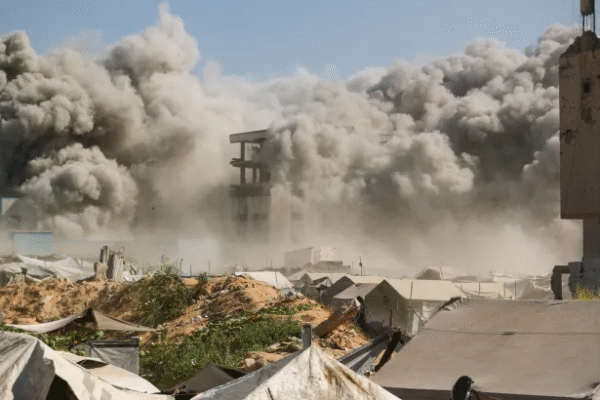
Gaza City / East Jerusalem – Israeli Prime Minister Benjamin Netanyahu has announced that Israeli ground forces will soon enter Gaza City, following a series of heavy airstrikes that killed at least 52 people across the Gaza Strip on Monday, including 32 in Gaza City alone. In the early hours of the day, Israeli warplanes targeted residential areas, including the destruction of a high-rise building in Gaza City. Images from the scene showed widespread devastation as emergency workers searched through rubble for survivors. Netanyahu, in a televised statement, warned civilians in Gaza City to evacuate immediately, stating that military operations would intensify in the coming hours. “Anyone who stays behind is risking their life,” he said. The escalation comes amid continued fighting in the occupied West Bank. In occupied East Jerusalem, six people were killed and several others wounded in a shooting attack that Israeli authorities have blamed on two Palestinians from the West Bank. The assailants were reportedly shot dead by Israeli police at the scene. Meanwhile, Palestinian officials and rights groups have condemned what they call a systematic campaign of displacement, pointing to Israeli military operations and settlement expansion across Palestinian territories. Mustafa Barghouti, a prominent Palestinian politician and activist, said ongoing raids and settler activity are “eliminating any chance for a Palestinian state,” further eroding hopes for a two-state solution. The Israeli military has intensified operations in both Gaza and the West Bank in recent weeks, citing security threats. However, the death toll continues to rise, drawing concern from international observers and humanitarian groups about the scale of civilian casualties and displacement.

Read More

Nigerian National Arrested in New Orleans for Fraud-Related Offences

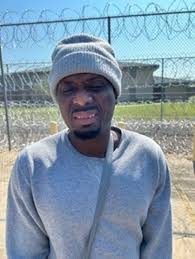
New Orleans, USA — U.S. Immigration and Customs Enforcement (ICE) has confirmed the arrest of a Nigerian national, Rotimi Oladimeji, in New Orleans for fraud-related crimes. In a statement posted on X (formerly Twitter) on Monday, ICE identified Mr. Oladimeji as a “criminal alien” and shared a photograph of him wearing a grey shirt and headwear. According to ICE, Oladimeji has a prior criminal record that includes charges of mail and wire fraud. He was previously ordered to pay over $1.1 million in restitution linked to those offences. “ICE New Orleans arrested him following his fraud conviction,” the agency said in the statement. Mr. Oladimeji now faces potential jail time and may be deported to Nigeria upon completion of his sentence.

Read More
Dangote Refinery Suspends Discount Scheme Over Marketers’ Diversion Racket

Dangote Advocates Urgent Prioritisation of Manufacturing over Raw Materials Export in Africa

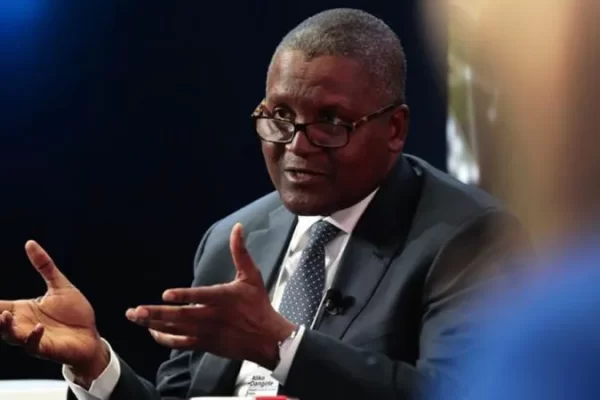
By Prince Iroka Africa’s wealthiest man and President of Dangote Industries Limited, Aliko Dangote, has called on Africans to leverage on internal strengths and global opportunities to fill existing gaps, and adopt a deliberate re-orientation toward industrialisation of Africa’s manufacturing sector, as a panacea against the current global economic instability. The renowned entrepreneur encouraged operators in the manufacturing and industrial sectors across the continent to embrace a fundamental shift in mindset and develop robust regional value chains and deepen intra-African trade as inward solutions to boost overall development across the continent. Dangote, who noted that current geo-political tensions and trade wars have caused major economies to reevaluate their traditional trade partnerships with a view to diversifying their supply chains, also urged African exporters to benefit from the current process to fill the gap by competitively supplying the required products. These recommendations were contained in Dangote’s welcome address at the company’s Special Day at the ongoing 4th Intra-African Trade Fair holding in Algiers, Algeria, where he was represented by his Special Adviser and Representative, Engr. Ahmed Mansur. “I am glad to be here at the 4th Intra-African Trade Fair (IATF). I am immensely grateful to the organisers – not only for inviting me and giving me the opportunity to speak – but also for going a step further by dedicating this remarkable day to my organisation, Dangote Group. To have today officially set aside as Dangote Day is both an honour and a privilege. “I thank the conveners – The African Export Import Bank, the African Union Commission and the Africa Continental Free Trade Area Secretariat – for organising this event. We appreciate the invaluable contributions you have made and the excellent work you continue to do in promoting, facilitating, and deepening trade and investment across the continent”, Dangote added. According to him, “this year’s theme, “Gateway to New Opportunities,” resonates deeply as a powerful reminder of the huge potential and prospects that abound across the African continent. For too long Africa’s resources have been exported as primary commodities in their raw and unrefined state with limited domestic processing or beneficiation. “There must be a fundamental shift in mindset and a deliberate re-orientation toward industrialisation and the development of Africa’s manufacturing sector. While this was always necessary in the past, it is even more urgent today, given the alarming rise in youth unemployment, and the need for sustainable, inclusive growth”, he added. The business tycoon observed that current geo-political tensions and trade wars have caused major economies to reevaluate their traditional trade partnerships with a view to diversifying their supply chains. “African exporters could benefit if they can fill the gap by competitively supplying the required products. Furthermore, global instability has encouraged African nations to look inward and actively pursue greater regional self-reliance. This inward focus can catalyse the development of robust regional value chains and significantly deepen intra-African trade”, he advised. “At Dangote, we are very proud of our Afrocentric posture, driven by an unwavering commitment to the continent’s growth and industrial transformation. We have added value to limestone and created the largest cement company in sub Saharan Africa with an aggregate cement production capacity of about 52MMtpa across 10 countries,” Dangote stated. “Similarly, our 3MMtpa urea plant has contributed to the attainment of fertiliser self-sufficiency. Nigeria, once solely reliant on imports is now a net exporter of granulated urea to destinations in Africa as well as to South America, North America and Europe. “More recently, we have witnessed the commencement of operation of Africa’s biggest oil refinery – also the world’s largest single-train facility, with a capacity of 650kbpd. This landmark project is gradually reducing the region’s long-standing dependence on imports of refined petroleum products, particularly from Europe, while also generating surplus for export to global markets. As Africa becomes more self-sufficient in energy it should reduce our vulnerability to external shocks and supply disruptions. “Africa’s potential and prospects are immense. However, this potential will only be fully actualised if individual nations take deliberate steps to improve their business environment. Unlocking new economic opportunities requires the implementation of appropriate policy reforms, investment in infrastructure, and attractive sector wide incentives to facilitate the inflow of private capital” Dangote concluded. At the Dangote Special Day, which drew admirers and various attendees, various Business Units of the conglomerate such as Dangote Cement, Dangote Sugar, Dangote Salt (NASCON), Dangote Fertiliser, Dangote Polypropylene, and Dangote Packaging did presentations and urged greater collaboration among trade partners and manufacturers across Africa for the development of the continent.

Read More

NAS Demands Increased Funding, Digital Inclusion, Accountability in Education Sector

The National Association of Seadogs (Pyrates Confraternity) has described Nigeria’s worsening literacy crisis as a “national emergency,” warning that millions of out-of-school children are being condemned to lives of poverty, exclusion, and crime unless urgent action is taken. In a statement issued on Sunday to mark this year’s International Literacy Day themed “Promoting Literacy in the Digital Era: Bridging the Gap,” NAS Cap’n, Dr Joseph Oteri, said the scale of Nigeria’s challenge was unprecedented. “Despite being Africa’s largest economy, Nigeria harbours the world’s highest number of out-of-school children. UNICEF puts the figure at 10.2 million children of primary school age, while UNESCO estimates it rises to 18.3 million when adolescents are included. In real terms, one in every five out-of-school children worldwide is Nigerian,” Oteri stated. He noted that this crisis undermines the country’s ability to meet global development benchmarks, particularly the Sustainable Development Goals (SDGs) relating to quality education, poverty reduction, gender equality, and reduced inequalities. According to him, persistent obstacles such as insecurity, poverty, child labour, gender discrimination, and poor infrastructure continue to push millions of children out of school and into risky environments where they are exposed to drugs, crime, exploitation, and even trafficking. “Literacy in the 21st century must be holistic, inclusive, and digitally empowered. Nigeria cannot achieve meaningful development while millions of its children remain uneducated, digitally excluded, and socially disenfranchised,” Oteri stressed. The NAS leader also raised concerns over Nigeria’s growing digital divide. He explained that while children in urban centres increasingly benefit from technology-enabled learning, millions in rural communities remain locked out due to lack of affordable internet, digital devices, and ICT centres. “This uneven access is widening inequality and could create a generation of digitally illiterate citizens in a world driven by knowledge and innovation,” he warned. To reverse the trend, NAS unveiled a six-point rescue plan for Nigeria’s education sector. First, Oteri called for greater public investment, with at least 20 percent of national and state budgets earmarked for education and closely monitored to prevent diversion of funds. He demanded the strict enforcement of the Universal Basic Education policy, ensuring free, compulsory, and quality schooling for every child, free from hidden costs. Thirdly, he pressed for digital inclusion, urging government to provide affordable broadband, digital learning devices, and community ICT hubs to bridge the technological gap. NAS also advocated expanded social protection measures, including larger school feeding schemes, scholarships, and conditional cash transfers to keep children from dropping out due to economic hardship. The fifth proposal stressed partnerships for change, with government collaborating more effectively with NGOs, civil society, faith-based organisations, and the private sector to mobilise resources and expertise. Finally, Oteri insisted on accountability and governance, demanding that anti-corruption safeguards be extended to the education sector to ensure resources actually reach classrooms and students. “Every child left uneducated today becomes a burden on society tomorrow. The cost of inaction is dire,” he warned. As part of its own contribution, Oteri announced that NAS would launch a month-long National Back-to-School Advocacy and Humanitarian Project from September 8 to October 8, 2025. The campaign, to be carried out by NAS chapters across Nigeria and abroad, will combine advocacy with direct support to children and families. According to him, this builds on existing initiatives such as the NAS Street Child Project and its Back-to-School Tuition Support Programme, which provide scholarships, educational materials, and community outreach to vulnerable children. The NAS Cap’n appealed to government at all levels, civil society, private sector, communities, and international partners to act decisively. “Literacy is more than the ability to read and write; it is the passport to economic participation, resilience against crime, and empowerment for citizenship. Together, we can bridge the gap. Together, we can secure a brighter future for every Nigerian child,” he concluded.

Read More
Dozens of people killed in assault on village in Nigeria’s Borno State

Dozens Killed in Boko Haram Attack on Borno Village Amid Security Lapses

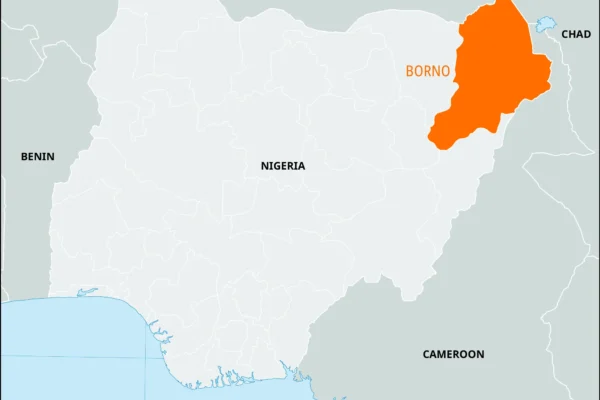
By Kamal Yalwa: BORNO STATE, NIGERIA – September 6, 2025 At least 55 people, including six soldiers, have been killed in a brutal attack on the village of Darul Jama in northeastern Nigeria’s Borno State, as concerns mount over renewed Boko Haram activity and the government’s policy of returning displaced civilians to vulnerable areas. Eyewitnesses and local officials said the assault occurred late Friday night when suspected Boko Haram fighters stormed the village on motorbikes, opening fire on residents and torching homes. The attack targeted a community near Nigeria’s border with Cameroon, where many families had only recently resettled after years in displacement camps. Estimates of the death toll vary. While a government-aligned militia commander, Babagana Ibrahim, confirmed 55 fatalities to AFP, the village’s traditional leader told Reuters that at least 70 bodies had been recovered by Saturday morning, with more residents missing in the surrounding bush. “They went house to house, killing men and leaving women behind. Almost every household is affected,” the traditional leader said, speaking anonymously for security reasons. Over 20 houses and 10 vehicles were destroyed in the assault. According to survivors, the military was warned three days in advance about the gathering of Boko Haram fighters in the area but failed to act. “They overwhelmed the soldiers, who fled with us to Bama,” said Babagana Mala, a resident who escaped the attack by fleeing 46km to the town of Bama. Many of the victims were among recently relocated families from a displacement camp at Bama’s Government Secondary School, which the authorities had shut down earlier this year as part of a broader resettlement policy. “The government told us we would be safe here,” said Hajja Fati, a mother of five who lost her brother in the attack. “Now we are burying our people again.” The massacre has reignited debate over Nigeria’s strategy of closing internally displaced persons (IDP) camps and relocating civilians back to rural communities—areas that remain targets for militant groups. Boko Haram has been waging an insurgency in Nigeria’s northeast since 2009, seeking to establish an Islamic caliphate. The conflict has killed over 40,000 people and displaced more than two million, mostly in Borno, Yobe, and Adamawa states. A splinter group, the Islamic State West Africa Province (ISWAP), broke away in 2016 and has been increasingly active. According to Good Governance Africa, a nonprofit tracking insecurity in the region, there were approximately 300 attacks in the first half of 2025, mostly by ISWAP, resulting in around 500 civilian deat A security source told AFP that the Darul Jama assault was likely led by Ali Ngulde, a notorious Boko Haram commander believed to operate in the region near the Cameroon border. Despite intensified military operations in Borno State, including airstrikes and ground patrols, communities continue to face high risks from armed groups operating across forested terrain and porous borders.

Read More