Poland shoots down Russian drones: Will NATO enter war in Ukraine?

Poland Shoots Down Russian Drones: Is NATO Being Pulled Into the Ukraine War?

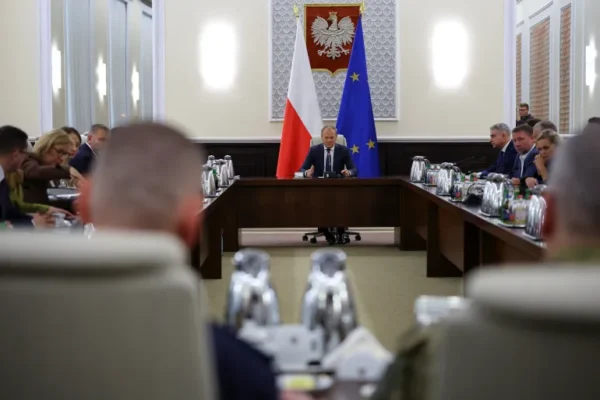
Tensions between NATO and Russia reached a new high this week after Polish and NATO forces intercepted multiple Russian drones that violated Polish airspace during Moscow’s aerial attacks on Ukraine. The incident, which occurred overnight Tuesday into Wednesday, marked the first direct military engagement between NATO forces and Russian assets since the full-scale invasion of Ukraine began in 2022. According to Poland’s military operational command, “unprecedented drone-type objects” crossed the border, triggering immediate response from Polish F-16 fighter jets, along with Dutch F-35s and Italian AWACS surveillance aircraft. One drone struck a residential building in eastern Poland’s Wyryki municipality, though no casualties were reported. Polish Prime Minister Donald Tusk condemned the incident as a “large-scale provocation,” warning that while Poland is not yet in a state of war, the situation is now “more dangerous than at any time since the Second World War.” The drones reportedly entered Polish airspace during a wave of Russian strikes on western Ukraine. Poland shut down at least three airports, including Warsaw’s Chopin Airport, and urged residents in border regions to take shelter. Prime Minister Tusk said 19 drones were detected in total, calling the attack a direct threat to Polish citizens. “We are ready to repel such provocations,” he stated, adding that his government is in ongoing consultation with NATO allies. The incursion has sparked questions about whether this could draw NATO more directly into the war. Under Article 5 of the NATO treaty, an armed attack on one member is considered an attack on all, requiring collective response. However, Article 5 is not automatically triggered. It requires unanimous agreement among member states that the attack qualifies under the treaty’s definition of armed aggression. To date, Article 5 has only been invoked once — by the United States after the September 11, 2001, attacks. Not yet. While Poland has not moved to invoke Article 5, Prime Minister Tusk confirmed that Article 4 will be triggered instead. This provision allows for emergency consultations among NATO members when a country feels its security is under threat — often a precursor to more serious collective action. “Words are not enough,” Tusk said. “We need much greater support from our allies.” This is not the first time Article 4 has been used in the context of the Ukraine war. Several Eastern European nations invoked it in early 2022, shortly after Russia’s invasion began. The use of Article 4 signals the seriousness with which Poland views the airspace violation, and could pave the way for an expanded NATO response — militarily, diplomatically, or through increased troop deployments along the alliance’s eastern flank. While NATO is unlikely to rush into open conflict with Russia without further escalation, the line between defense and engagement is growing thinner as Russian military operations increasingly affect NATO territory, intentionally or otherwise. The drone incursion into Poland does not yet mean war between NATO and Russia — but it has moved the alliance closer to the edge. Whether that line will be crossed depends on Moscow’s next moves, and how NATO chooses to respond to what many see as a dangerous provocation.

Read More
Amnesty International says forced displacement in Gaza ‘unlawful and inhumane’

Amnesty International says forced displacement in Gaza ‘unlawful and inhumane’

The rights watchdog says that Israel’s mass evacuation orders for Gaza City have compounded genocidal conditions in the strip, where Israeli authorities continue to severely restrict humanitarian assistance and Israeli attacks kill scores of civilians. “The order issued yesterday morning by the Israeli military for the mass displacement of Gaza City residents is cruel, unlawful, and further compounds the genocidal conditions of life that Israel is inflicting on Palestinians,” Heba Morayef, Regional Director for the Middle East and North Africa at Amnesty International, said in a statement. The press release quotes a medical worker in Gaza describing the impossible dilemmas of another round of forced displacement. “I don’t want to leave my patients, the little children whose bodies are too frail to deal with yet another displacement, but I don’t know what to do. It’s like having to choose between two deaths: death by bombardment or the slow death of displacement, not knowing where to go,” they said. “I have already been displaced on 15 occasions; I couldn’t sleep a wink for the past few nights because of the heavy bombardment nearby, and we’re still trying to go to our work to treat the children, but we have collapsed.”

Read More
Can Nigeria Still Qualify for the 2026 FIFA World Cup After South Africa Draw?

Can Nigeria Still Qualify for the 2026 FIFA World Cup After South Africa Draw?

By: Kamal Yalwa: September 9, 2025 Nigeria’s quest to reach the 2026 FIFA World Cup remains uncertain following a 1-1 draw with South Africa in a crucial Group C qualifier on Tuesday evening in Bloemfontein. The result, while hard-fought, leaves the Super Eagles further adrift in the race for an automatic qualification spot and raises pressing questions: Can Nigeria still qualify for the World Cup? Here’s what we know. Tuesday’s draw was yet another frustrating chapter in what has been a turbulent qualifying campaign for Nigeria. Missing key players, most notably striker Victor Osimhen due to injury, the Super Eagles once again showed flashes of quality — but failed to convert chances into three points. An own goal by William Troost-Ekong gave South Africa the lead before Calvin Bassey headed in the equaliser before half-time. Despite dominating parts of the second half, Nigeria couldn’t find a winner, leaving them outside the automatic qualification places. South Africa remain top of Group C, maintaining a comfortable lead over their rivals. Nigeria, meanwhile, are now at risk of falling behind both South Africa and another key contender depending on other matchday results. With only the top team in each group guaranteed automatic qualification for the 2026 World Cup, Nigeria’s position is precarious. Nigeria still has matches left to play, but the margin for error is now virtually non-existent. To stand a chance of direct qualification, the Super Eagles must: If direct qualification slips out of reach, Nigeria could still be in contention for a CAF play-off spot, which allows certain group runners-up to fight for a final place via intercontinental play-offs. The draw against South Africa underlined some of the team’s recurring issues — defensive lapses, missed chances, and lack of consistency in attack. Head coach Eric Sekou Chelle now faces increasing pressure to turn things around quickly. While qualification remains mathematically possible, the Super Eagles must deliver near-perfect performances in their remaining matches — and hope results elsewhere go their way. Yes, Nigeria can still qualify for the 2026 FIFA World Cup — but the path is now steep, and every remaining game is effectively a must-win. Anything less, and Africa’s most populous nation could miss out on football’s biggest stage.

Read More

Israel launches airstrikes on Yemen’s capital Sanaa, day after bombing Doha

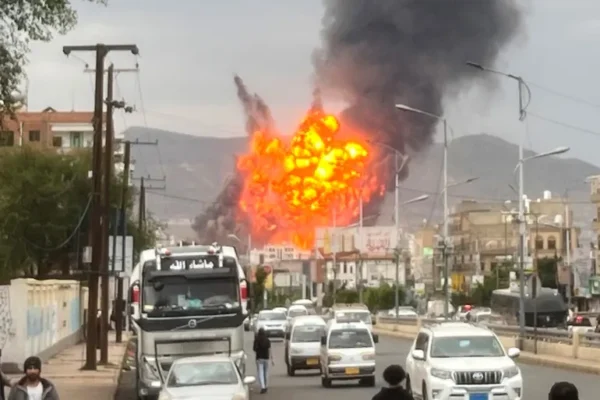
Published By Kamal Yalwa: September 10, 2025 Sanaa, Yemen – At least nine people have been killed and more than 100 injured after Israeli warplanes carried out airstrikes on Yemen’s capital, Sanaa, and the northern al-Jawf governorate on Wednesday. The attack comes just a day after Israeli forces reportedly struck Hamas leaders in Doha, Qatar. Yemen’s Ministry of Health reported 118 people wounded in what it described as Israeli aggression, noting that the death toll could rise as emergency teams continue rescue operations. The airstrikes targeted several civilian and government sites, including a medical facility on al-Sitteen Street in southwest Sanaa, residential homes in the al-Tahrir neighborhood, and the local government compound in al-Hazm, the capital of al-Jawf. The Moral Guidance Headquarters was also hit, according to Houthi-run Al Masirah TV, which reported casualties and property damage. Houthi military spokesperson Yahya Saree said the group responded with surface-to-air missiles, claiming that some Israeli aircraft were forced to retreat before releasing their weapons. In a statement, the Israel Defense Forces confirmed the attack, saying its air force targeted Houthi military positions, public relations offices, and fuel storage sites used for logistics and combat support. Prime Minister Benjamin Netanyahu stated the airstrikes were in response to a recent Houthi drone attack on Ramon Airport in southern Israel. Netanyahu said Israel would continue to strike back against any entity that targets it, warning that anyone who attacks Israel will be pursued. This strike is the latest in a series of Israeli attacks on Yemen. Last month, an Israeli air raid reportedly killed top Yemeni officials, including Prime Minister Ahmed al-Rahawi. The Houthis accused Israel of attempting to pressure the group into withdrawing its support for Gaza. They reiterated that their operations would continue until a ceasefire is achieved in the Palestinian territory, where more than 64,000 people have reportedly been killed since the war began in October 2023. The Houthis have also maintained a maritime blockade on Israeli-linked ships passing through the Red Sea and have launched drone and missile attacks on Israeli territory in support of Palestinians.

Read More

VP Shettima Urges National Council on Skills to Embrace Unity, End Fragmentation in Skills Development

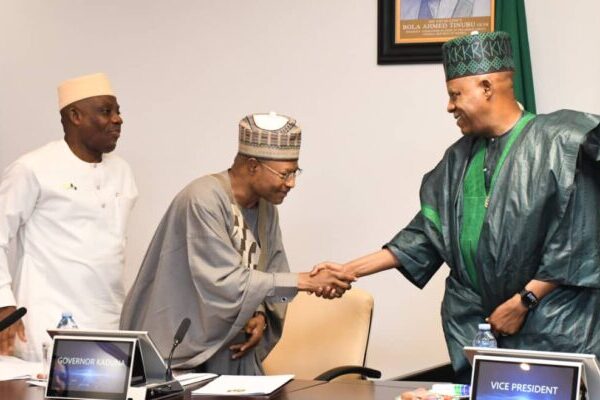
By: Kamal Yalwa: September 10, 2025 Vice President Kashim Shettima has called on the National Council on Skills (NCS) and all relevant stakeholders to work collectively in advancing the federal government’s skills acquisition drive, declaring that the era of working in silos is over. Speaking during the 7th meeting of the NCS held Tuesday at the Presidential Villa, Abuja, Shettima emphasised that building a future-ready workforce requires unified action across government agencies, ministries, and the private sector. He described skills development as a core pillar of the Renewed Hope Agenda of President Bola Tinubu’s administration. “Let me be clear about what this means. The era of operating in silos is over. We must move towards a new streamlined workflow that embeds collaboration directly into the process of curriculum development and funding,” the Vice President stated. He noted that the ongoing “skills revolution” is a national commitment and must be driven with purpose and synergy to unlock opportunities for Nigerian youth and workers nationwide—from the aspiring artisan in Kaura Namoda to mid-career professionals in Ebute-Metta. Shettima lauded Kaduna State Governor, Senator Uba Sani, for establishing and chairing the state’s first Council on Skills, calling it a model for other subnational governments to emulate. “We cannot build a future-ready workforce on a foundation of division,” Shettima stressed, urging the council to enforce a unified structure and eliminate institutional friction within the country’s skills ecosystem. He further emphasized that sustainable funding and implementation of the national skills agenda depend on strong inter-agency collaboration, not isolated action. Earlier in the meeting, Governor Uba Sani revealed that over 30,000 students were recently admitted into the Kaduna Vocational and Skills Development Institute. He thanked the Vice President for his continued support and dedication to job creation and skills development. Also speaking, Minister of Education Olatunji Alausa praised the Kaduna State Government’s efforts and announced that technical colleges have been directed to focus solely on relevant, practical courses for the upcoming academic year—aligning with the administration’s skills acquisition strategy. The council meeting reaffirmed the federal government’s commitment to building a coordinated and inclusive framework to equip Nigerians with the skills needed to thrive in an evolving economy.

Read More
INEC Confirms David Mark as National Chairman of ADC Amid Party Restructuring

INEC Confirms David Mark as National Chairman of ADC Amid Party Restructuring

By Kamal Yalwa: September 10, 2025 The Independent National Electoral Commission (INEC) has officially confirmed Senator David Mark as the National Chairman of the African Democratic Congress (ADC), bringing clarity to the party’s leadership amid recent internal disputes. The confirmation, reported by a TVC News correspondent, follows a period of mounting tension within the ADC over its national leadership. INEC’s recognition is expected to pave the way for stability and unity within the party ranks. Alongside Senator Mark, INEC also recognised several newly appointed national officers who were unveiled during a high-profile coalition event in Abuja this past July. The new leadership team includes: With its leadership now formally endorsed, the ADC is anticipated to launch a nationwide reconciliation and mobilisation campaign as it works to bolster its political standing ahead of the 2027 general elections. This latest development marks a significant shift in the party’s trajectory and signals a renewed focus on internal cohesion and national outreach.

Read More

African Union Chair Condemns Israeli Strike on Qatar, Urges Restraint

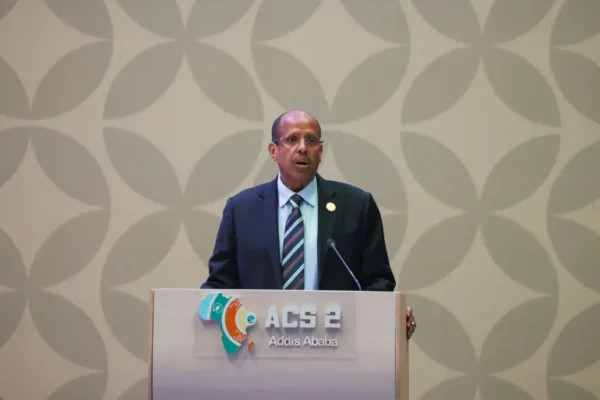
Addis Ababa, Ethiopia – September 10, 2025The African Union has joined the growing chorus of international condemnation following Israel’s airstrike on Qatar’s capital, Doha, which targeted a residential building reportedly housing Hamas officials. In a statement issued on Tuesday, Mahmoud Ali Youssouf, Chairperson of the African Union Commission, warned that the Israeli attack “risks endangering an already fragile situation in the Middle East.” Youssouf called for “restraint, respect for sovereignty, and the protection of civilians,” echoing longstanding AU principles on peace and conflict resolution. “Qatar has played a longstanding role in peace, mediation, and diplomacy,” he said, highlighting the Gulf nation’s role in facilitating ceasefire talks and regional dialogue. The AU chair emphasized the urgent need for renewed diplomatic efforts toward achieving a just and lasting peace in the region. The statement comes a day after the Qatari government denounced the strike as a “cowardly attack” and a “blatant violation of international law.” The incident marks the first known Israeli military operation on Qatari territory, raising concerns over further escalation in the broader Middle East conflict.

Read More
Qatar condemns ‘cowardly’ Israeli attack in Doha

Qatar Condemns Israeli Strike in Doha as Cowardly Attack on Sovereignty

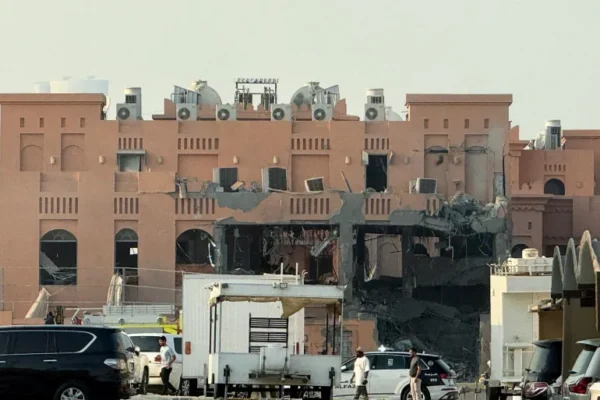
Qatar’s Ministry of Foreign Affairs has strongly condemned an Israeli airstrike that targeted a residential building in the capital, Doha, which was reportedly housing Hamas officials. The attack, described by Qatari authorities as a “cowardly” act, marks the first known Israeli strike on Qatari soil. In an official statement, Foreign Ministry spokesperson Majed al-Ansari called the attack a “flagrant violation of international law” and warned that Qatar would not tolerate such aggression. “The State of Qatar affirms that it will not tolerate this reckless Israeli behavior and its continued tampering with regional security,” al-Ansari said, adding that investigations are ongoing and further details will be released. Casualties Confirmed Qatar’s Interior Ministry confirmed the death of Corporal Bader Saad Mohammed Al-Humaidi Al-Dosari, a member of the Internal Security Force (Lekhwiya), who was killed while on duty at the targeted site. Several other security personnel were reportedly injured. Israel Confirms Operation Israeli Prime Minister Benjamin Netanyahu confirmed the strike, stating it was a “wholly independent Israeli operation” targeting top Hamas leaders. “Israel initiated it, Israel conducted it, and Israel takes full responsibility,” Netanyahu said on social media. The targeted building, located in a densely populated area of Doha, is surrounded by residential units and several foreign embassies. The explosions were felt across the city. Hamas Leadership Survives Despite the strike, Hamas officials confirmed that the group’s leadership survived what they described as an “assassination attempt.” The attack reportedly took place while Hamas negotiators were meeting to discuss a new U.S.-backed ceasefire proposal for Gaza. Suhail al-Hindi, a senior Hamas official, labeled the strike a “cowardly assassination attempt” in remarks to Al Jazeera. Qatar’s Role in Mediation Undermined Qatar has long played a key role in mediating ceasefire efforts between Israel and Hamas, often working in partnership with Egypt and the United States. The targeted Hamas office in Doha was reportedly established at the request of the U.S. to facilitate diplomatic efforts. Al Jazeera correspondent Osama Bin Javaid noted the unprecedented nature of the strike, stating, “This is not a country at war. This is a country trying to establish peace.” Wider Conflict Escalates The attack in Doha comes amid escalating regional tensions. Israel continues to conduct military operations across Gaza, Lebanon, Syria, Yemen, and the occupied West Bank. According to rights groups, Israel’s offensive in Gaza has killed over 64,000 people since October 2023, prompting the International Criminal Court to issue an arrest warrant for Netanyahu on war crimes charges. This latest strike is being viewed as a dangerous escalation, with potential implications for diplomatic mediation and regional stability.

Read More