

Understanding IQ Metrics Across Nations: A Closer Look at Gambia, Ghana, and Nepal
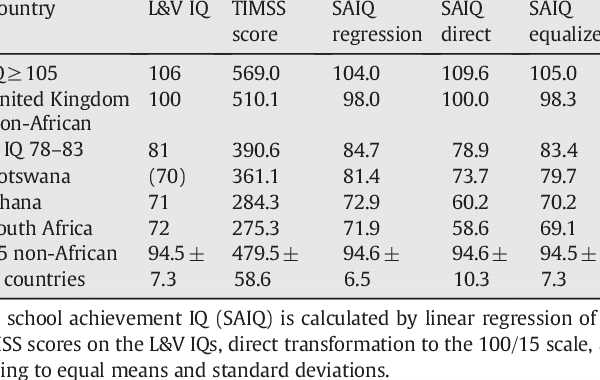
The concept of intelligence, particularly when measured by IQ (Intelligence Quotient), has long been a subject of fascination and debate. Lists ranking countries by average IQ scores often circulate online, sometimes pointing to nations like Gambia, Ghana, and Nepal as having lower averages. But what do these rankings really tell us? Are they a fair reflection of human potential, or do they oversimplify a far more complex reality? In this post, we’ll explore the factors behind these rankings, why they’re controversial, and what they might mean for countries like Gambia, Ghana, and Nepal. The IQ Controversy: What Are We Measuring?IQ tests aim to measure cognitive abilities like problem-solving, reasoning, and memory. However, their application across diverse cultures and environments is fraught with challenges. Studies like those by Richard Lynn and others, which often inform global IQ rankings, rely on standardized tests that may not account for cultural differences, education access, or environmental factors. For example, a test designed in a Western context might not resonate with someone from a rural village in Nepal, where daily life demands different forms of intelligence, like spatial navigation or agricultural knowledge.Gambia, Ghana, and Nepal frequently appear in discussions about lower average IQ scores, often based on data from studies like Lynn’s. These countries, with average IQs reportedly ranging from 60 to 70 (compared to a global mean of 100), are cited as examples of cognitive disparity. But these numbers don’t tell the whole story. Let’s unpack why.Contextual Factors: Why Scores Vary Gambia, Ghana, and Nepal: Beyond the NumbersFocusing solely on IQ scores risks overlooking the strengths and resilience of these nations: The Bigger Picture: Rethinking IntelligenceRankings like “low IQ countries” can perpetuate harmful stereotypes if taken at face value. Intelligence is multifaceted, shaped by environment, culture, and opportunity. Gambia, Ghana, and Nepal, like all nations, have unique strengths that simplistic metrics fail to capture. Instead of focusing on deficits, we should celebrate the diverse ways humans solve problems and thrive.Global IQ studies can spark curiosity, but they demand context. Investing in education, healthcare, and economic opportunities in countries like Gambia, Ghana, and Nepal would likely shift these metrics dramatically. More importantly, it would empower individuals to reach their full potential—whatever form that takes.ConclusionLists ranking countries by IQ may grab headlines, but they obscure more than they reveal. Gambia, Ghana, and Nepal are not defined by test scores but by their people’s resilience, creativity, and potential. Intelligence is not a single number—it’s a tapestry woven from culture, environment, and opportunity. Let’s move beyond rankings and focus on building a world where everyone can shine.